Posts Tagged ‘environment’

OUR FLORA-VERSE

Thank you to the poets who have kindly shared their talents for this #ScienceWeek celebration! This year’s theme, SEEDS TO SCENERY, has germinated lullabies for trees and forests; lyrics for weeds and optimism for endangered plant species. It includes gardening fauna, fabulous fragrances and essential DNA and H2O.
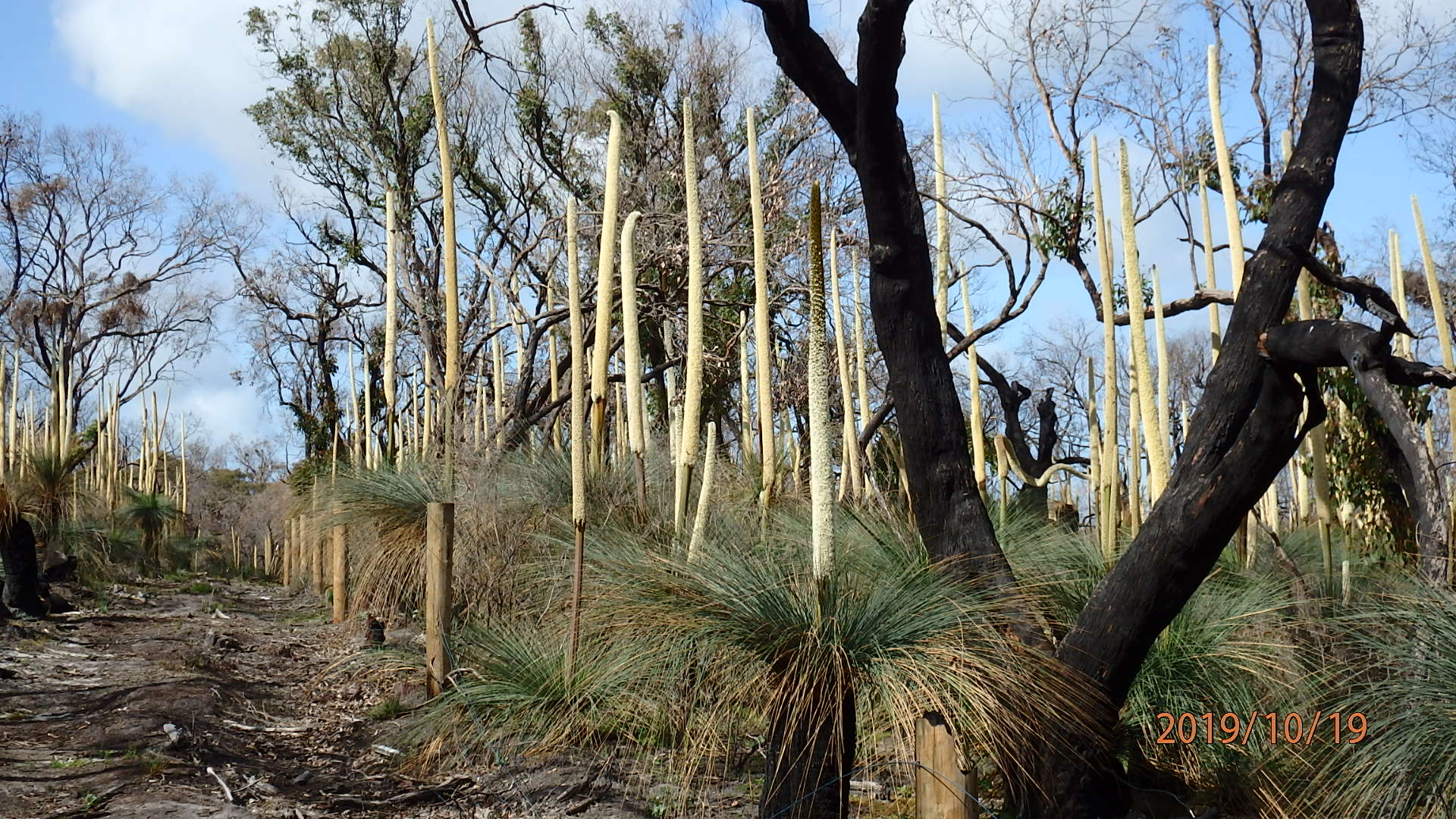
Photo of Grass Tree Forest by Hartley Tobin

Grass Trees Under Fire by Meryl Brown Tobin

In Grantville Grass Tree Forest
en masse bloomed hundreds of grass trees––
maybe a once-in-a-lifetime sight.

In the spring following summer bushfires
the host of creamy flower spikes attracted bees,
in Grantville Grass Tree Forest.

Some blackened trunks sprouted
multiple spikes thick as a woman’s knees––
maybe a once-in-a-lifetime sight.

To burned remnant native bush
native orchids, wildlife returned to please––
in Grantville Grass Tree Forest.

Hundreds of grass trees stand
like skirted hunters, spears to tease––
maybe a once-in-a-lifetime sight.

Sand miners now expand their pit
and dig up, bag grass trees, despite all pleas,
in Grantville Grass Tree Forest.
Indeed a once-in-a-lifetime sight?

After intense bushfires in Grantville, Victoria in early 2019, many hundreds of grass trees bloomed the following spring in the Grantville Grass Tree Forest at the Grantville Nature Conservation Reserve and sand mine on Crown Land next to it. A natural botanical phenomenon and maybe the best Grass Tree display ever seen in Australia. Much of the the ancient forest has now been dug up, bagged and translocated to allow expansion of the sand mine. Locals are fighting to ensure the rest of the forest is preserved in perpetuity.
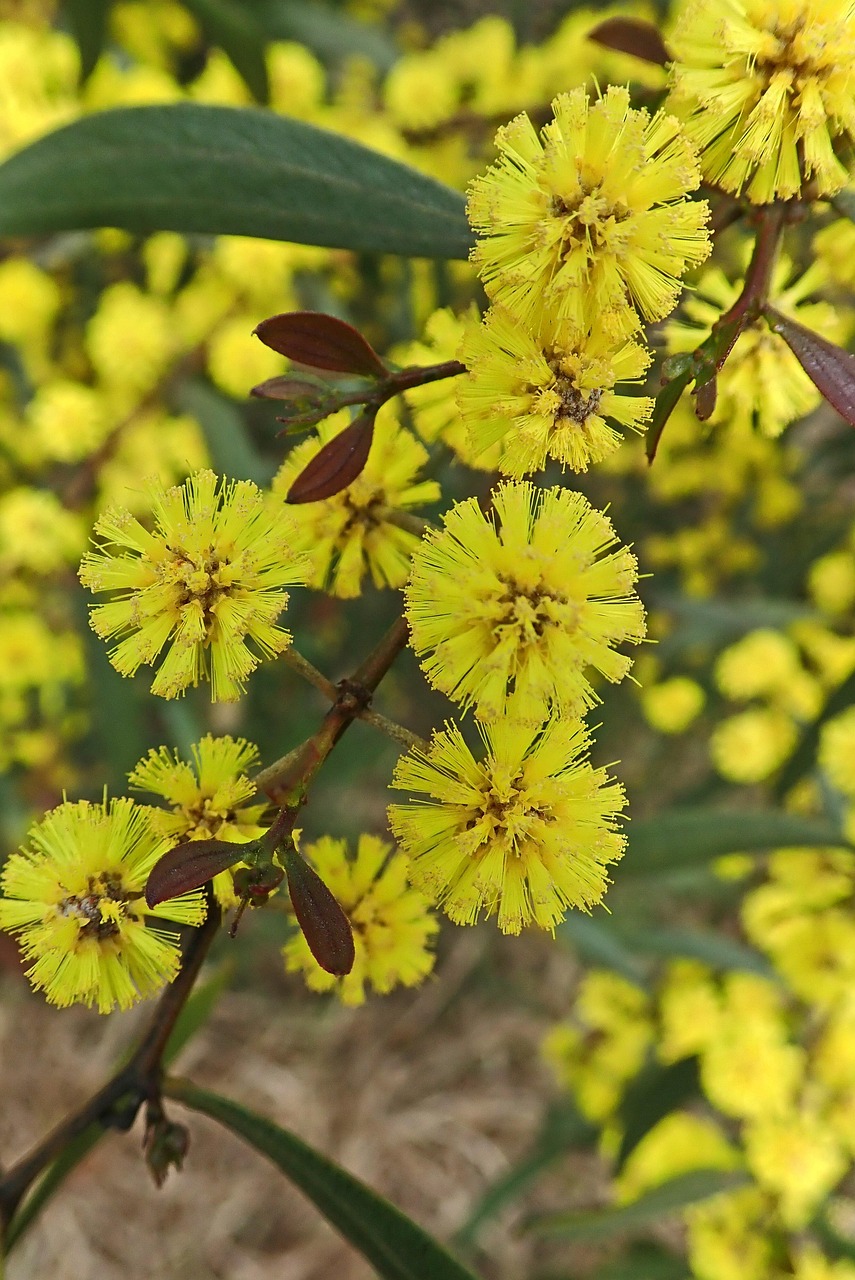
Acacia equisetifolia is critically endangered – Northern Territory

Wattle I do? by Diane Finlay

I am a lonely little wattle shrub
my family name is Fabaceae (fab-AY-see-ee)
by various strange and wonderful ways,
I’m related to the pea.

Peas are plentiful
but my fellow family members dwindle by the day.
Acacia equisetifolia is critically endangered
so the scientists say.

I’d really love to have a chat
calling out across the sandy ground,
“Is anybody there?”
then hoping for an answer
to float on through the humid air.

If anyone in the big wide world
would like to visit me
this is where I’ll be:
Graveside Gorge
Kakadu National Park
in the Northern Territory.

I’ll put my yellow pom-pom blooms on show,
they’re a little like dandelion clocks you know.

You’ll find me in a woodland glade
of woollybutt and bloodwood trees;
they’re shady, kind and friendly
but far too big to be my family.

My seed pods need a fire to burst them into life,
a little one will do.
It rained a lot last night and I am so surprised to see,
where last season I popped a pod or two
a teeny tiny green shoot – a sprouting Mini-me.
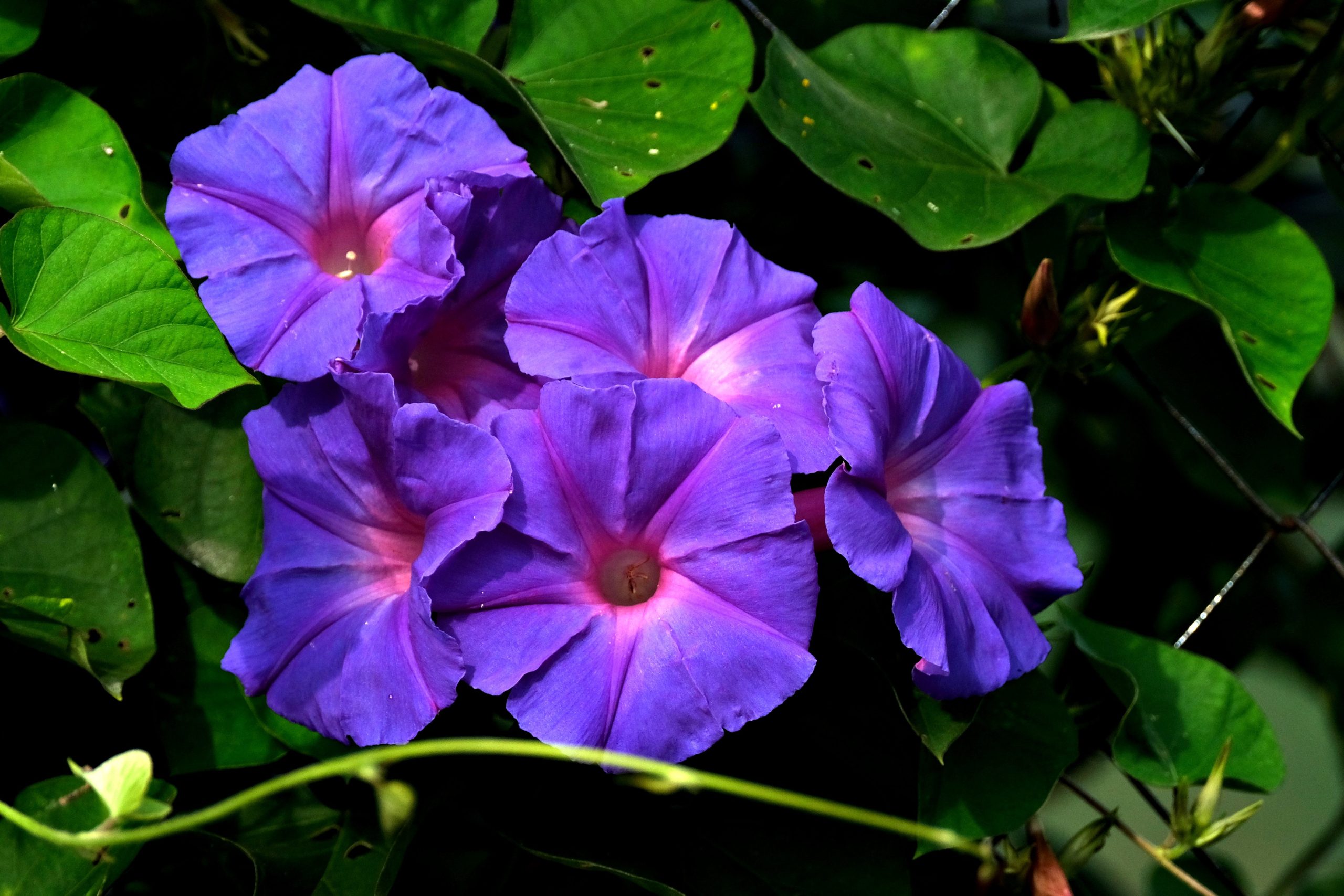
Space Invaders by Erica Chester

When introduced plants come to our land
they invade, take hold and expand

Our desert sands are chock-a-block
with bright red, English Rosy Dock

Other plants, same old story
like the purple Morning Glory

Tumbleweed, oh tumbleweed
You roll so far and spread with speed

Lantana: though pretty you are
invade weed-like so wide and far

English Ivy, sturdy and green
grows like Jack’s fabled bean

Blackberry, you taste divine
but oh, you’re hard to confine!

Gamba Grass and Prickly Pear
change ecosystems everywhere

So, let’s clean up! Give native plants
a really good fighting chance!

When Australia was colonised, many plants were brought from England and beyond to remind the new settlers of home. These plants frequently spread far and wide, irrevocably altering Australian ecosystems. These introduced plants had no natural predators or competition, so they regularly outcompeted (and sometimes pushed to and even beyond the brink of extinction) our own native vegetation. Many scientists and environmental groups are still fighting tirelessly to eradicate these plants from our wilderness areas.
Seed-to-Tree Action by Sukarma Thareja & Celia Berrell

I’m a very small seed
and hidden in me
is the plan that I need
to grow a great tree.

I don’t need to see
the whole of me,
just read DNA
like a book about me!

Page one says, “please start”.
That gives me my height.
Page two: “grow this fast”
for slope – that’s my rate.
Page three: “start to bend”,
my curves will begin.
You see, all instructions
are hidden within.

Height, slope and bend
are just the beginning
of functions, instructions
that keep our tree growing.

In Maths, this is called
a Taylor Expansion –
growing the shapes
for seed-to-tree action.
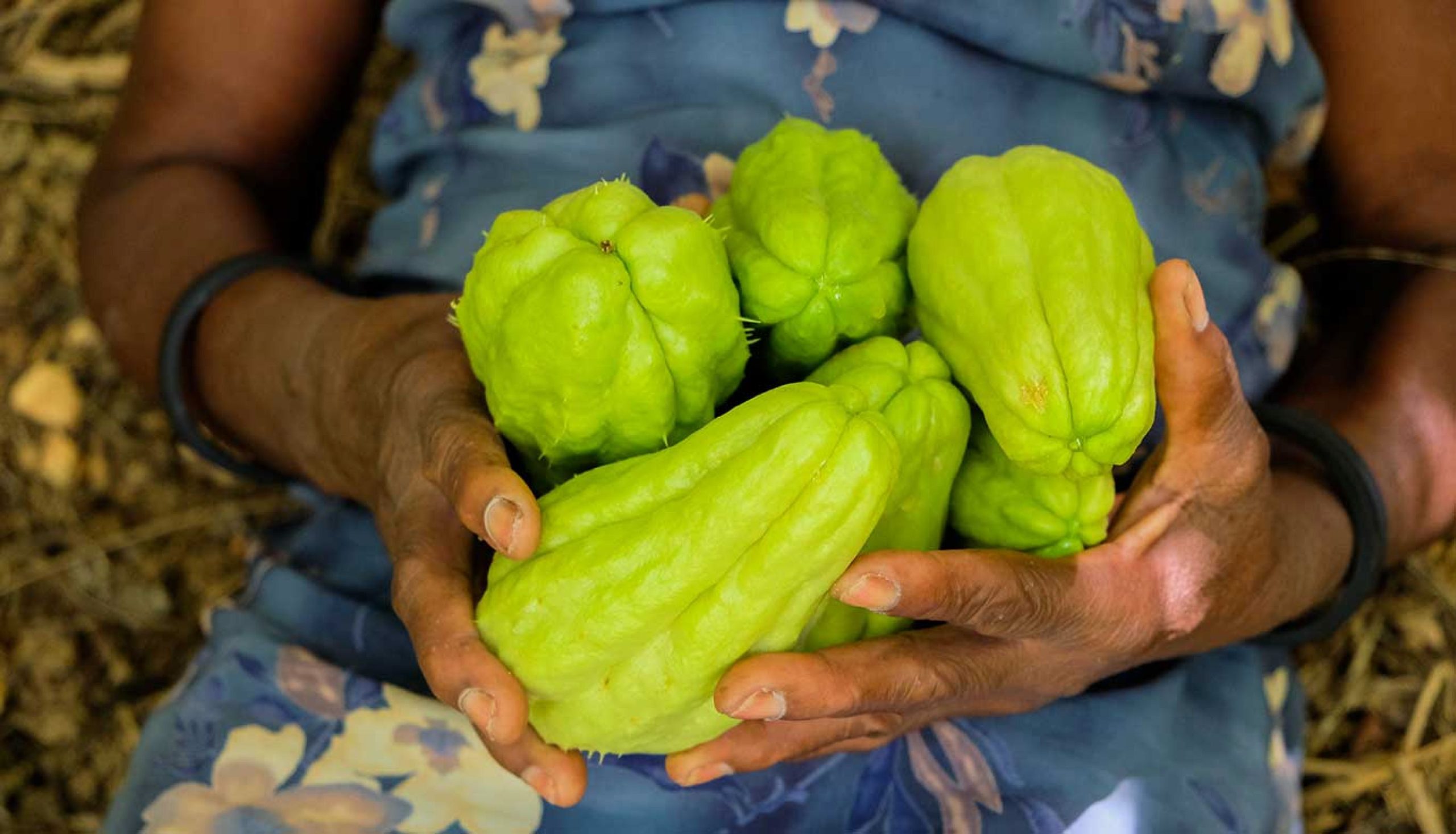
Hello, I’m a choko! by James Aitchison

Call me a choko or a chayote,
Or a vegetable pear.
I’m nicely green and spiky,
You can grow me anywhere.
On backyard fences or on sheds,
My vines just love to climb.
Plant me when I sprout,
I’ll grow for you in no time.
Cut me in half, remove my seed,
And boil or steam or roast me.
Serve me up for dinner,
With melted butter mostly.
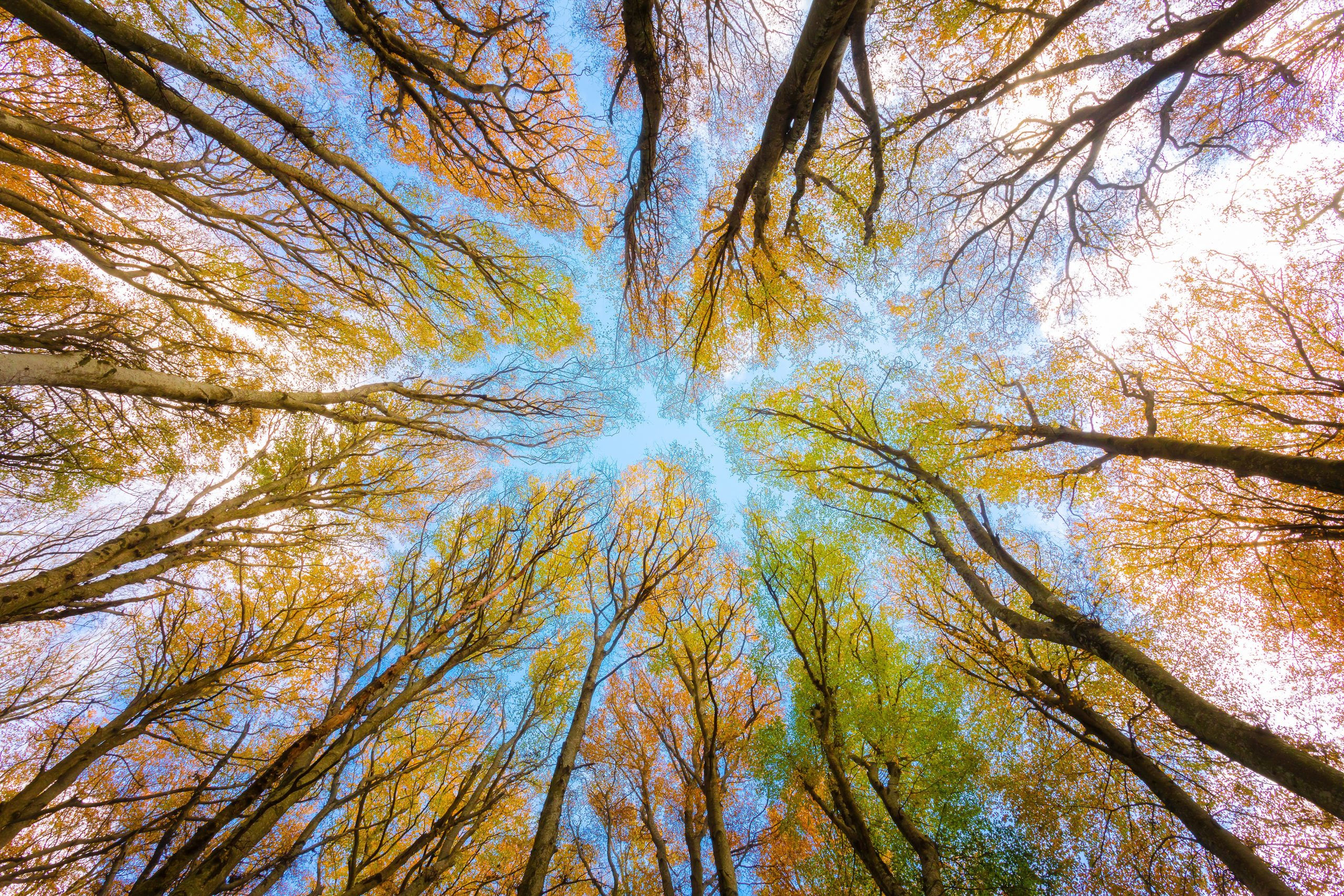
Every Tree in the Park by Jeanette Swan

I love to stare through leaves under old wide trees,
beneath canopies of glittery sunshine
rustled by breaths of some invisible breeze:
each tree is a parasol – a living design.

I love seed-codes, sudden sprouts, giants’ ages;
bud-burst, summer stretch, autumn, winter stages.

When bowed in purple storms,
when wild branches thrash,
lightning strikes – cracks…
trees, still magnificent – crash!
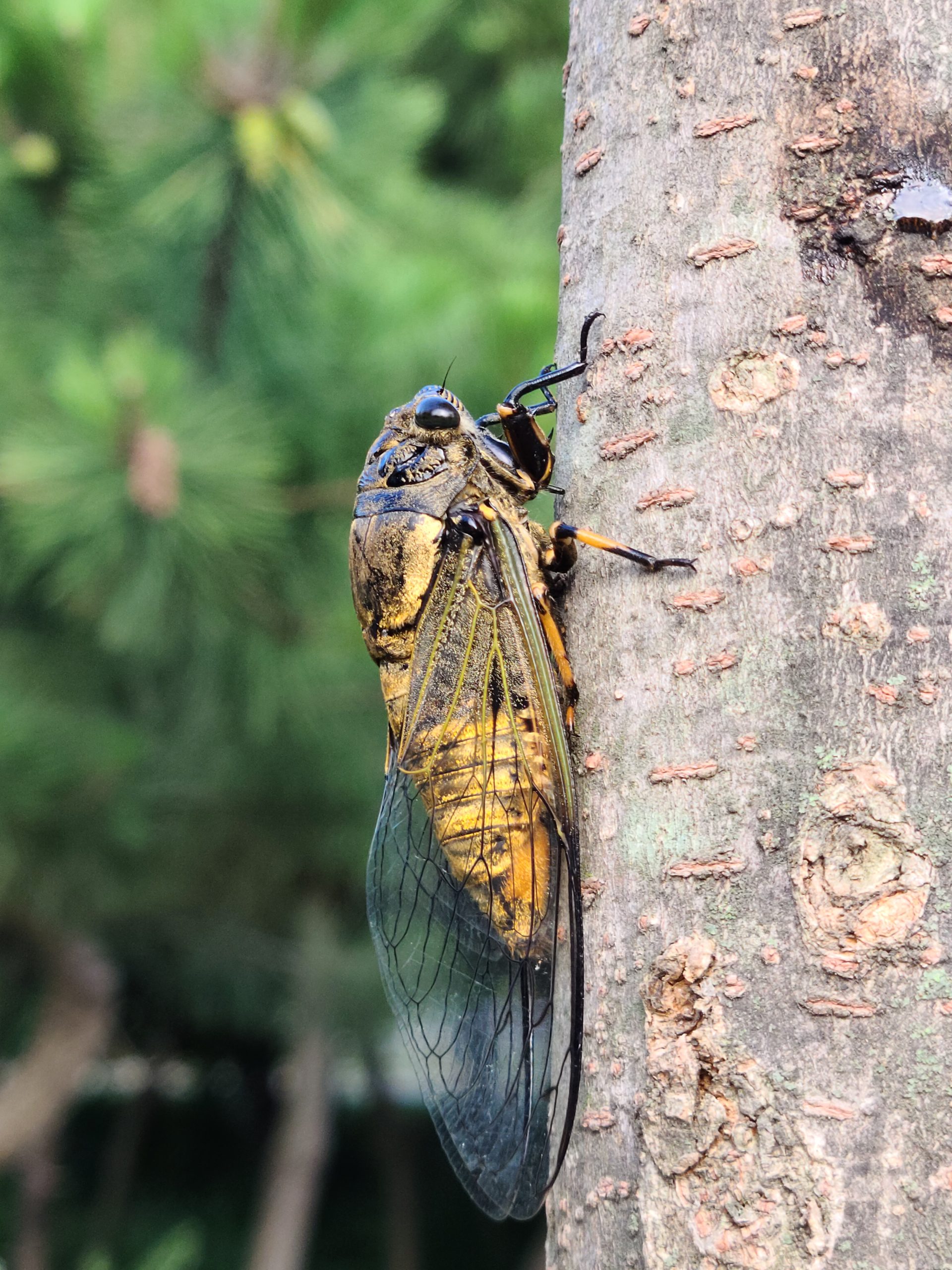
In the Shade of Trees by Jeanette Swan

Softly, one grey spider weaves
underneath the heart-shaped leaves.

Upside-down, cicadas cling.
All the day they loudly sing.

I stand still beneath them all.
They are little. I am small.

Shimmer by Stefan Nicholson

Touched by the breath of a silent breeze,
the shimmering Derwent comes alive,
dancing to flashes, a field of golden light,
like ripples of honey from a busy hive,
lighting the distance to frame a wondrous sight,
where, wild birds take rest – and float and dive.

Then, as the blustering North-Wester arrives,
with heavy clouds, the shimmer is transformed,
into a grey and solemn phase,
mist and drizzle, soften the wildlife sounds.
It surely will last for several days,
with howling wind ensuring no wild birds are found,
even amid the swaying trees. They left early. No more for us to gaze.

For Autumn is upon us . . . only stragglers remain.
And in haste they now prepare, for cold grey days ahead,
or rest quietly, for ever,
in an icy, wintery bed.
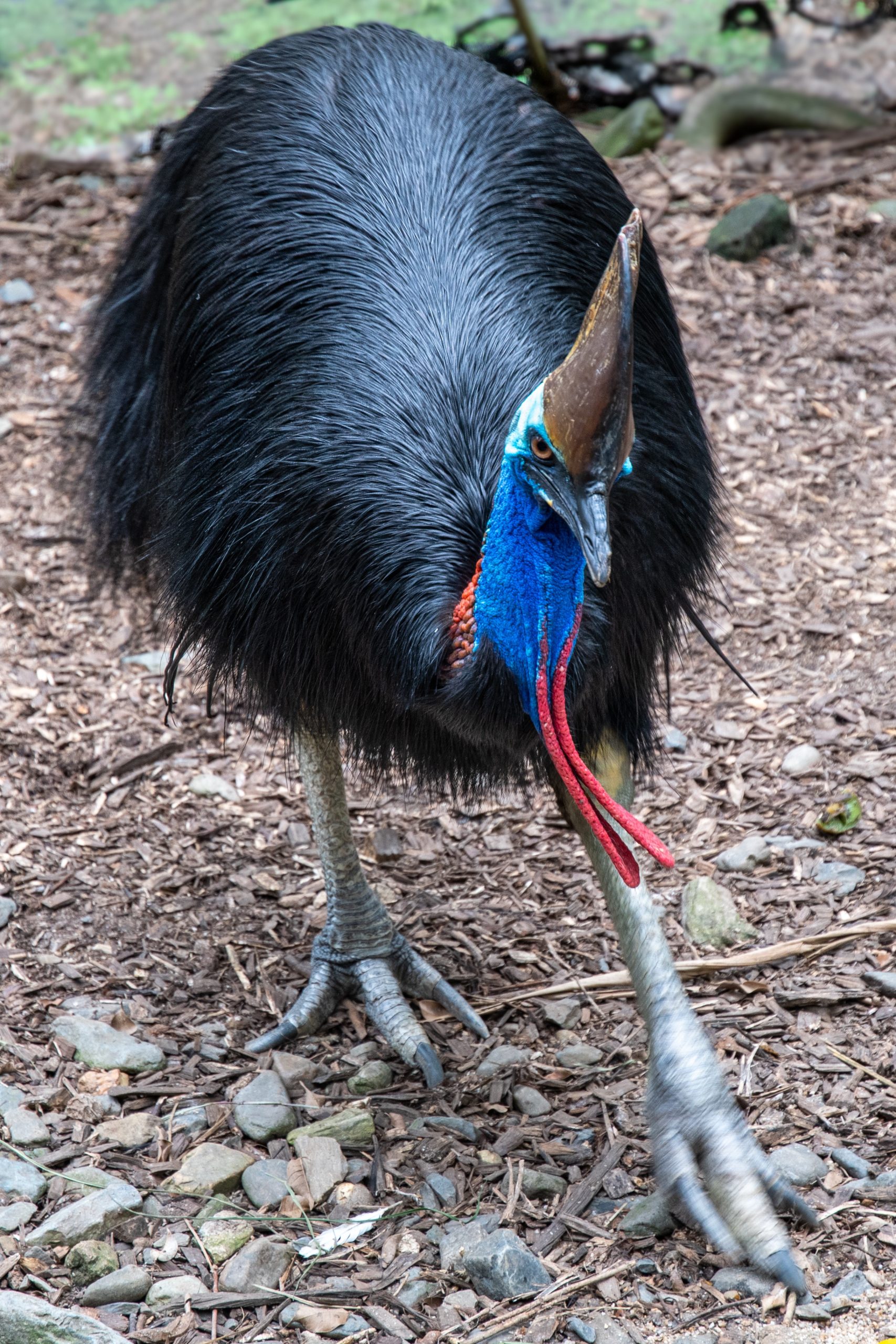
Rainforest Gardeners by Linda Davidson

Large and colourful, with a casque on their heads;
Glossy black feathers with three toes to tread,
Cassowaries are known as the rainforest gardeners.
They swallow fruit whole then become seed dispersers.

A favourite food is the Davidson Plum;
Those seeds germinate when excreted in dung!
This marvellous system of nature’s creation
Ensures northern rainforest’s regeneration.
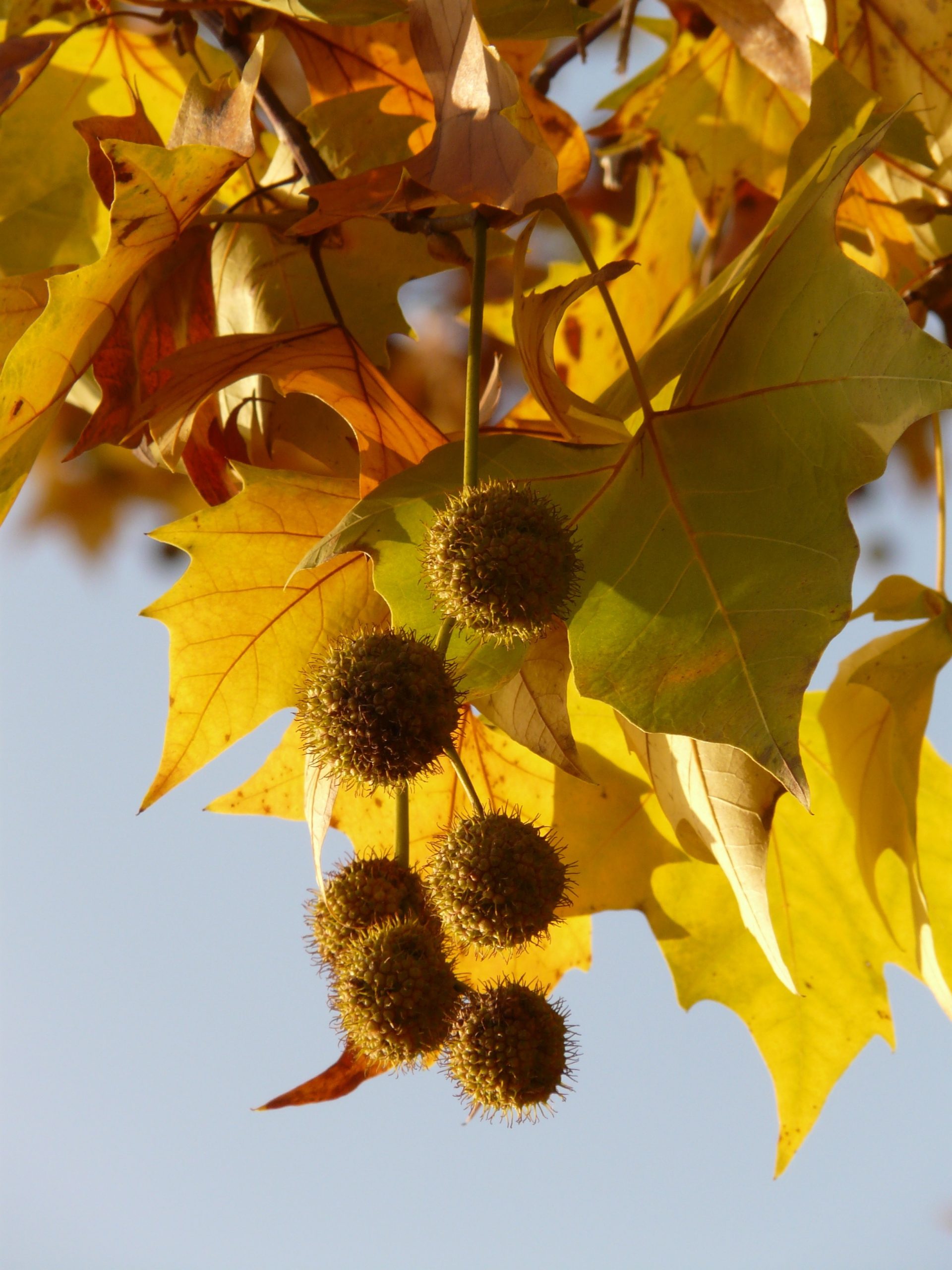
The Plane Tree by Toni Newell

The Plane Tree isn’t plain
It’s beautiful to see
A canopy that reaches far
A woody perennial tree.
Their seeds are housed inside
Hairy round seed pods
That dangle from its branches
Raspatory system it’s at odds.
Bare branches spread in winter
For it is deciduous
Can grow to fifty meters tall
In tree world it’s prestigious.
The plane tree wasn’t born here
Some came from London town
They’re now in many cities
And for me they wear the crown.
Artwork by Andrea Lew

H2O by Andrea Lew

Did you know that
H2O
is the chemical symbol for water?

Hydrogen, Hydrogen Oxygen.
Drink several glasses every day
to keep the doctor away.

Did you know that
H2O
is good for health and hydration?

It regulates body temperature
and is part of respiration.

Did you know that
H2O
exists as liquid, solid and gas?

On Earth we have all three
Elsewhere it’s mostly found as ice.

Vital for health and hydration,
this refreshing liquid drink,
for humans, plants and animals
deserves our celebration!

Lemon Myrtle Haiku by Jeanie Axton

campfire scones
the fragrance of lemon myrtle
sparks a memory
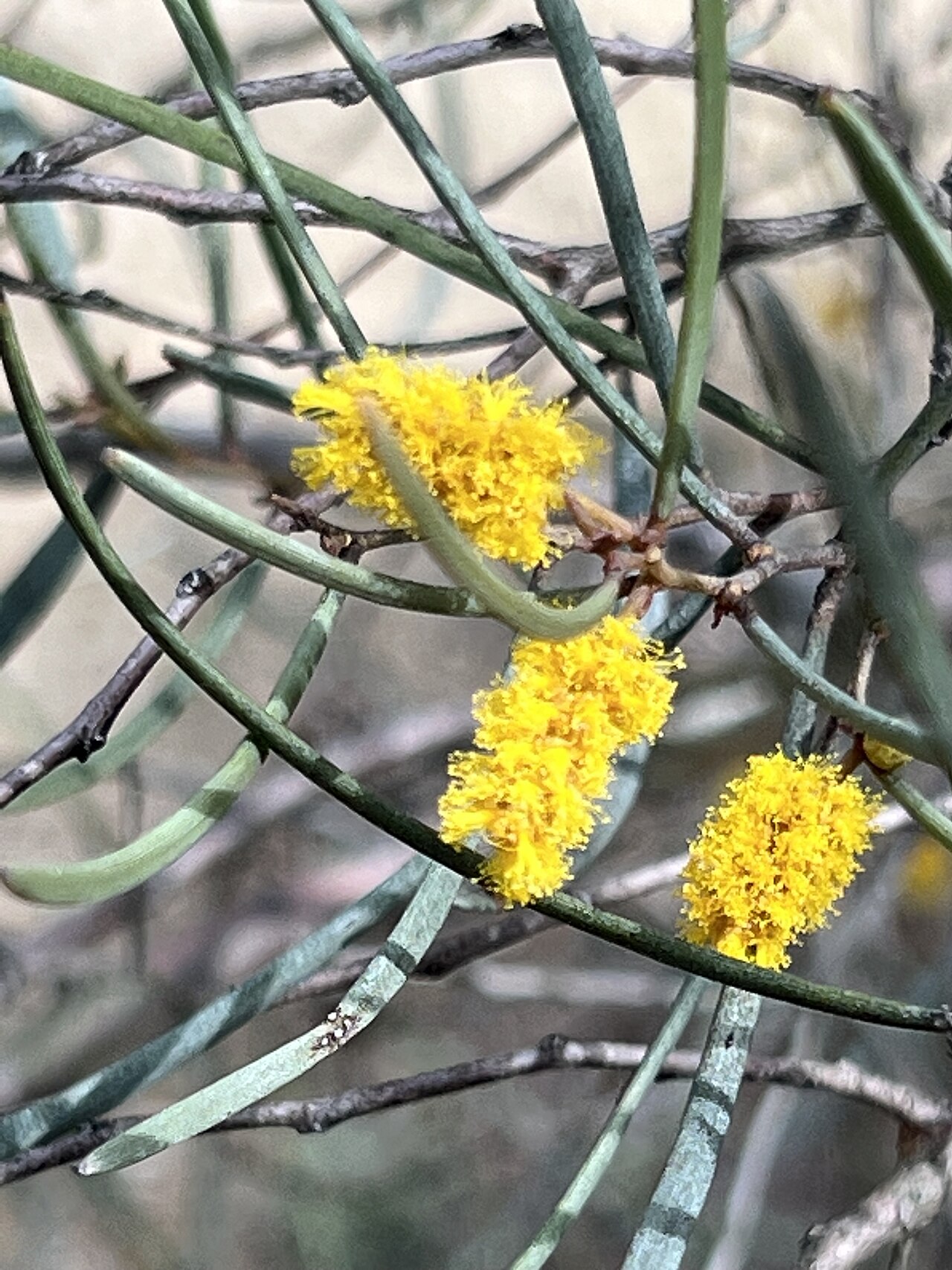
Sturdy Mulga Trees by Celia Berrell

Stretching up towards the skies
or weeping boughs drawn by their sides,
iconic mulga, drab and droll,
still represent Australia’s soul.

In sunburnt soils on arid lands,
with long strong roots, the mulga stands.
High heat; cold nights are mulga’s fate.
In drought these trees can hibernate.

Their rugged bark with groovy tracks
can channel drips down trunks of black.
Instead of leaves, they’ve phyllodes.
Flattened stems that clatter breeze.

Mulga blossoms, tassled gold,
are quick to let sweet-scents unfold.
Flowering not for Spring, but rain.
Should water kiss their harsh terrain.
ITTYVERSE

A big THANK YOU to all the adults and students who have shared their little creations, either as POEMS or HAIKU, for this year’s National Science Week!

POEMS:

The smartest things are smaller than me  by Aaron

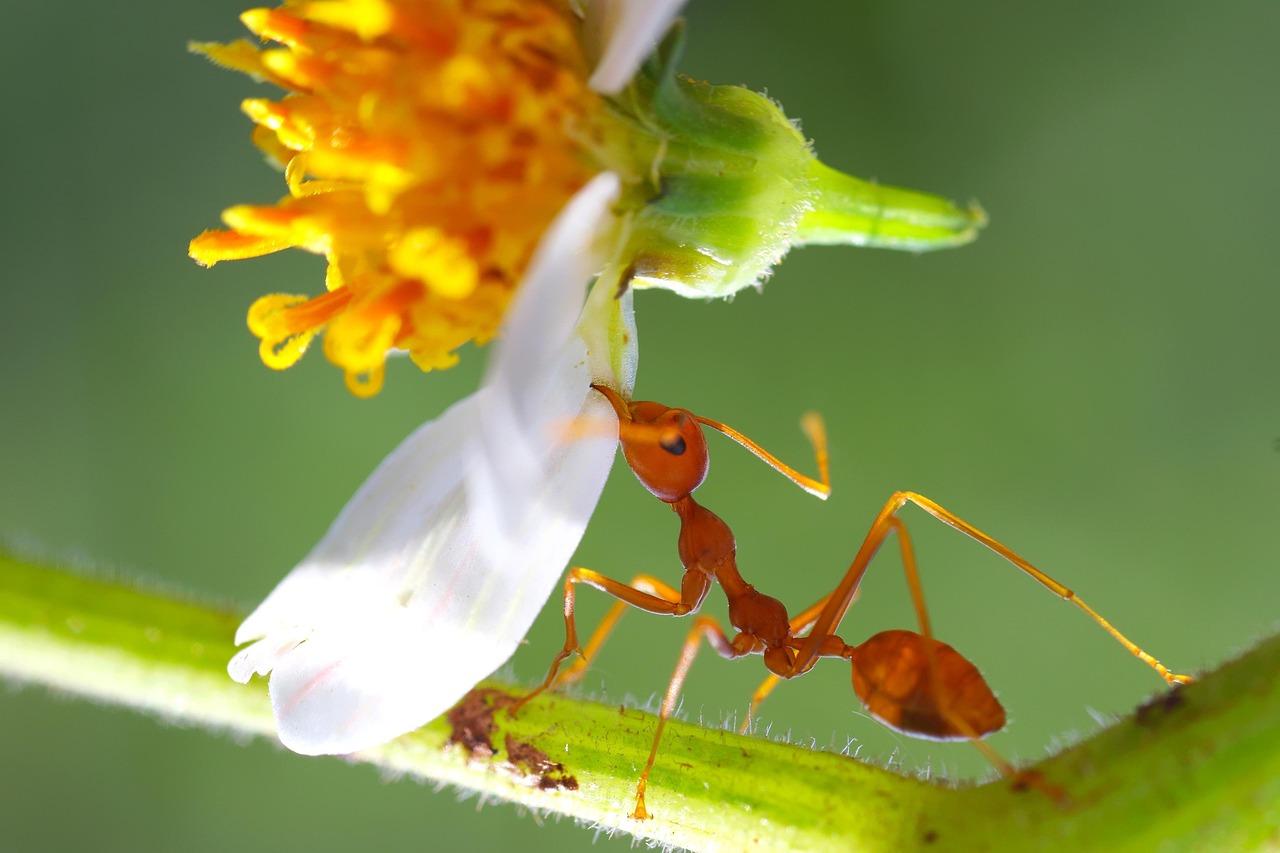
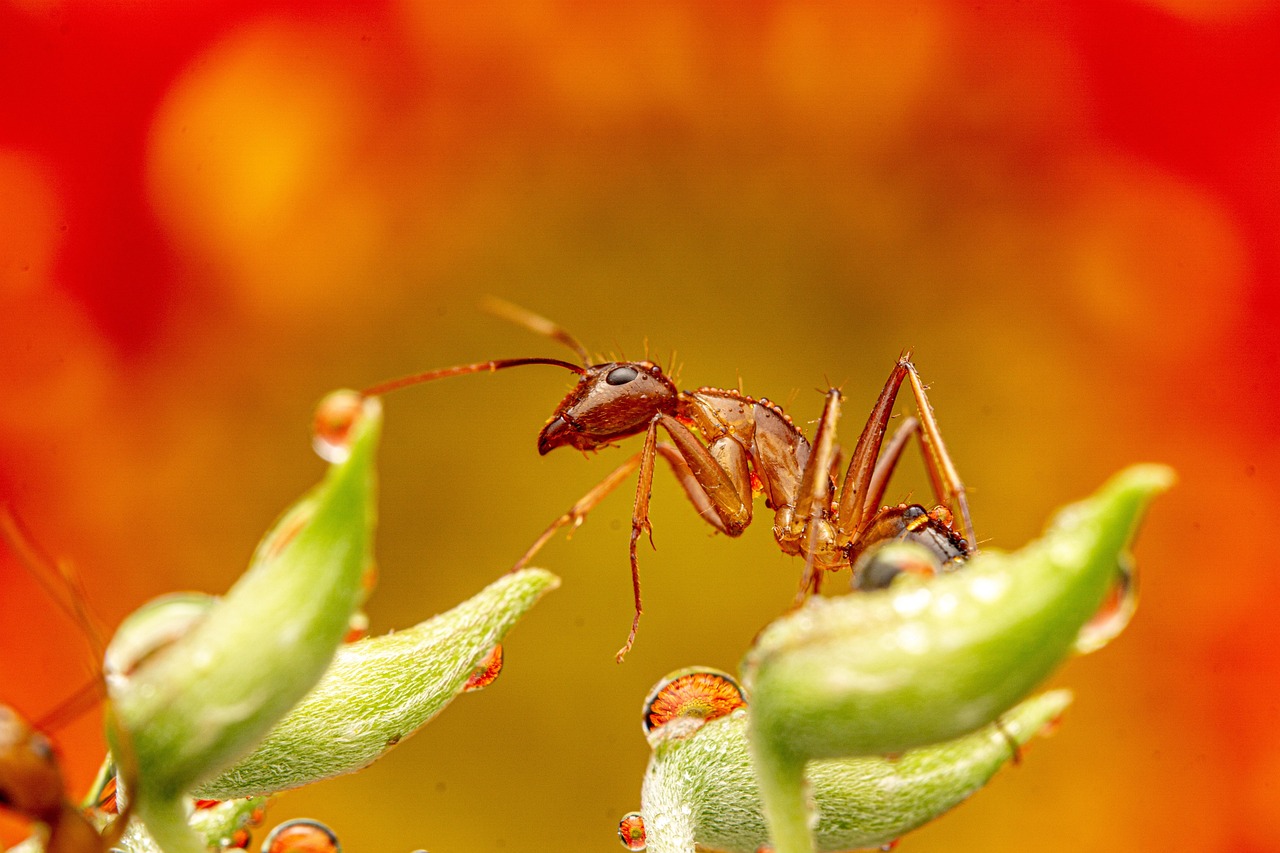
I looked down at an ant today,
I tried not to hurt her or get in her way. 
She carried crumbs five times her size 
That’s strength that wins a science prize!

I watched her walk a dirt track,
Then disappear and not come back. 
Do ants have maps inside their heads? 
Or maybe science books in their beds?

I learned they talk with smells, not words, 
(Not like us or dogs or birds). 
They sniff the ground to say “Go here!” 
Their tiny brains are pretty smart and clear!

They’re smaller than my little toe, 
They build huge cities down below! 
And now I think, just maybe, possibly, 
The smartest things are smaller than me.

Aaron is 8 and lives near Victor Harbour in SA.  He is a home-school student and mother, Emily, helped him submit this poem.


Small but big  by Bella & ChatGPT

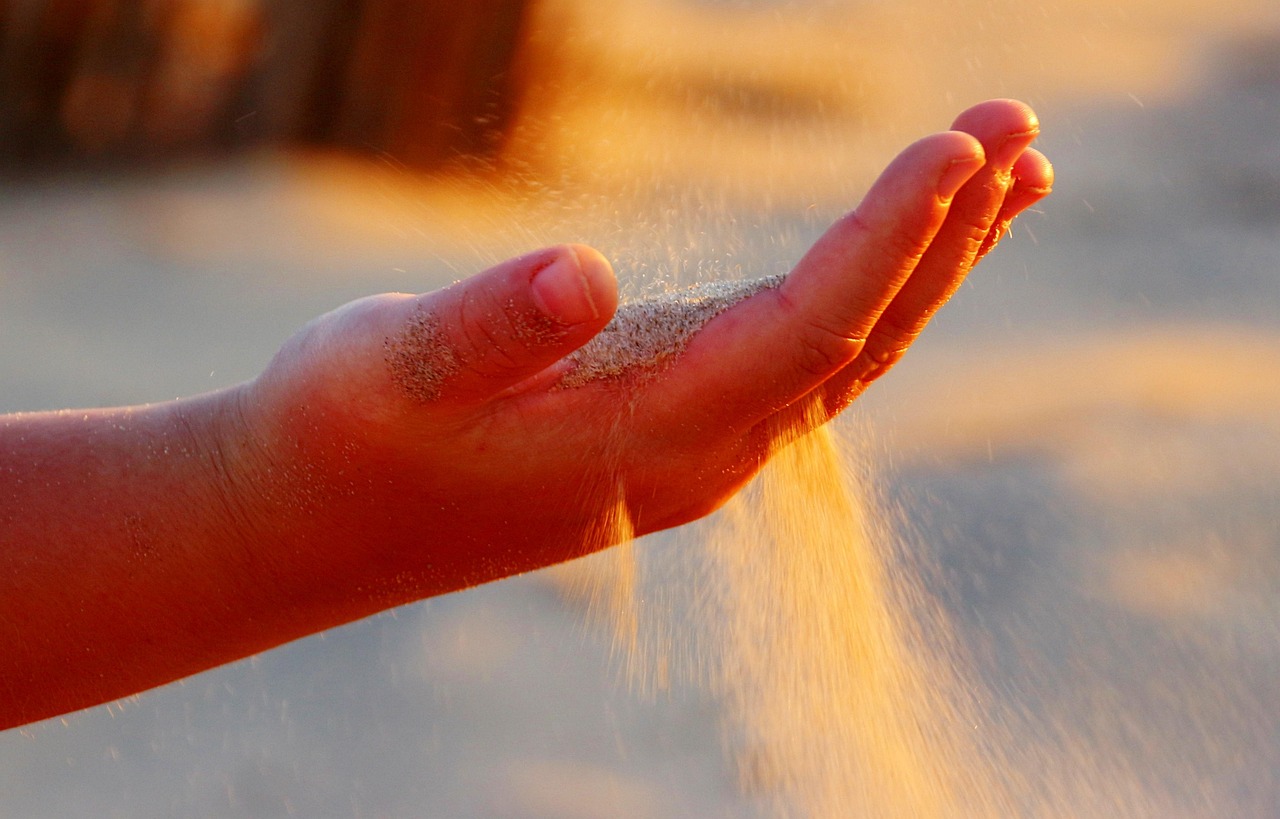
Sand is smaller than my hand, 
Tiny bits all over the land. 
It’s at the beach, between my toes, 
Where water splashes and summer goes.

The beach is part of Earth so wide, 
With shells and waves and crabs that hide. 
No sand? No beach to jump and run, 
No beach? No summer, no sunny fun!

No fun means Earth feels kind-a flat, 
No giggles, games, or beachy hats 
So even though it’s small and round, 
Sand’s the biggest thing I’ve found!

Bella is a Year 1 student at Crestwood Public School in NSW.  She said that she really enjoyed the process of writing this poem with the help of ChatGPT.  She gave the AI specific instructions and edited its response.


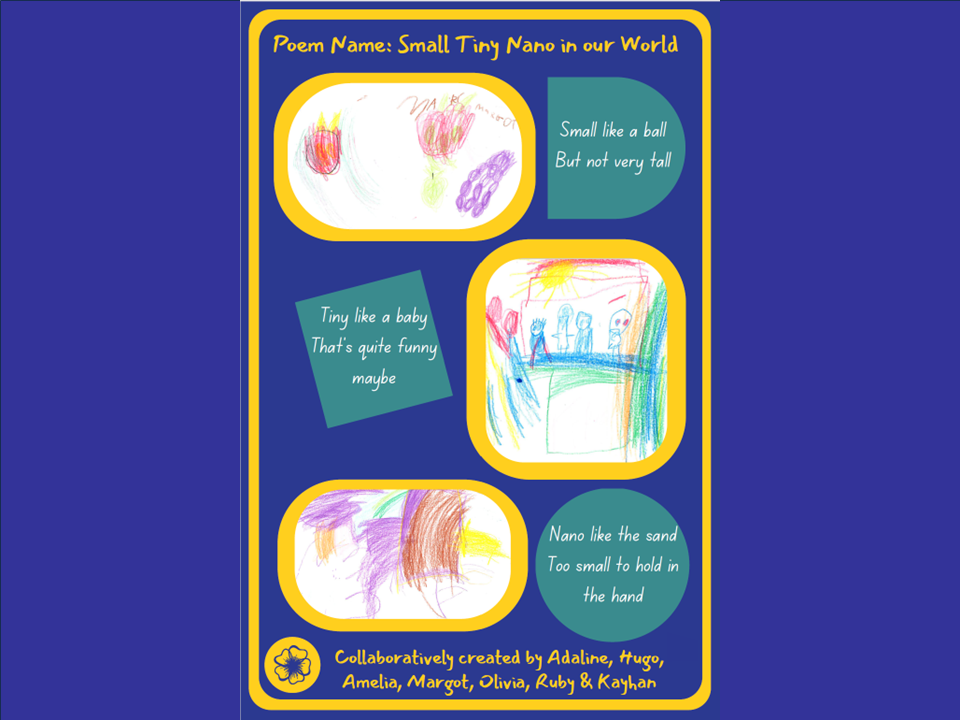
Small Tiny Nano in our World  from Buttercups Northbridge Childcare & Early Learning Centre, Perth WA

Teacher Rista Chutoo-Bereba organised this delightful presentation by Adaline, Hugo, Amelia, Margot, Olivia, Ruby & Kayhan.  Their words are: SMALL LIKE A BALL BUT NOT VERY TALL; TINY LIKE A BABY THAT’S QUITE FUNNY MAYBE; NANO LIKE THE SAND TOO SMALL TO HOLD IN THE HAND.


Amazing Little Critters  by Toni Newell

Although very tiny 
They’re strong as can be 
Can lift many, many times 
the weight of their body. 
Classified as insects 
They live in colonies 
Are known to be social 
But have their enemies 
Ladybugs, anteaters 
Fungi, moth butterflies 
Spiders, other ants 
And humans in disguise 
Using different pesticides and 
Natural remedies 
To neutralize their presence 
Affects their colonies. 
I admire the little critters, 
Who have their roles to play 
In our planet’s biodiversity 
Which the negatives outweigh.

Toni Newell is a regular contributor to Australian Children’s Poetry.


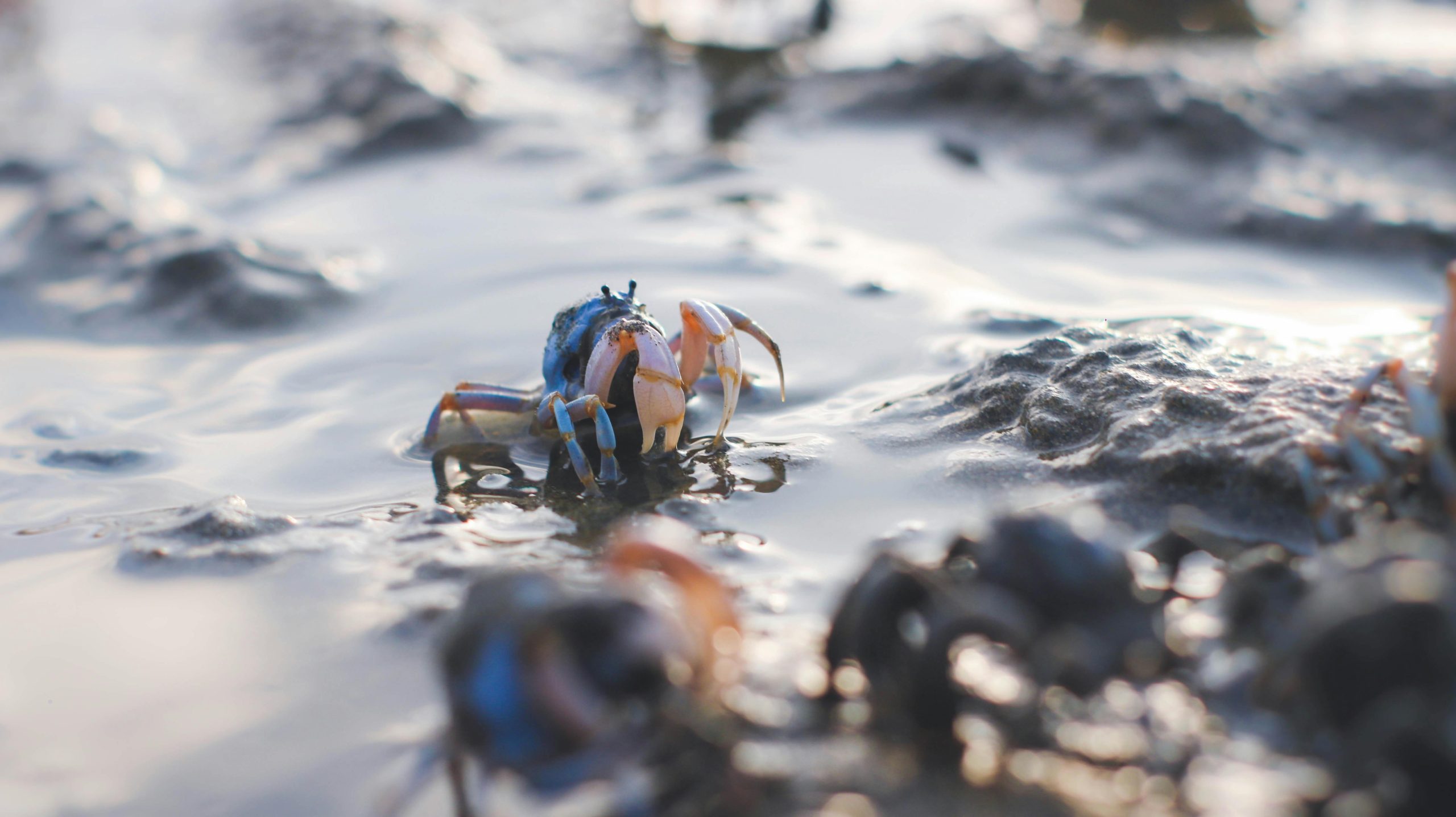
Soldier Crabs  by Linda Davidson

The Soldier crabs are marching 
at the edge of the sandy low tide. 
An army of purple and orange 
surprisingly blends in to hide. 
Their ranks don’t appear to be organised 
as they crawl across muddy sand. 
Their small round bodies swarm together 
as they scramble over water and land.

Linda Davidson has poems published in Australian Children’s Poetry and Dirigible Balloon.


The Food Chain  by Erica Chester

Every day, out in the wild 
The animals, both fierce and mild 
Need to eat for en-er-gy 
From a big whale to a small bee

Not burgers, like you and your brother 
No, they prefer to eat each other 
It may seem quite inhumane 
But it’s just part of the food chain

Imagine a proud wedge-tailed eagle 
Eating a king brown, so regal 
King browns like to eat thornbills 
Who catch small insects with their skills

They feast upon the grass and seeds 
To meet their nutritional needs 
And when the eagle’s time is done 
He decomposes in the sun

His body feeds the soil and ground 
Where many grasses can be found 
So here we are, back at the start 
The natural world sure is smart.

Erica has poems published in Dirigible Balloon.


Call of the Beach  by Meryl Brown Tobin

She walks along the beach, 
white sand beside blue sea. 
It calls to her each morning, 
its beauties she must see. 
She stops to pick up shells, 
exquisite and sublime, 
each one a unique miracle
of colour, weight, design.

Tracks beyond the water 
tell of visitors overnight–– 
of dogs and birds and foxes; 
overhead a pelican in flight. 
She follows it along the beach–– 
on a mudflat stretch it lands. 
Though it stays well out of reach 
it’s as if it’s in her hands.

In time the bird flies off 
and she turns and heads for home. 
The sun is out and warm it is 
so she walks barefoot in foam. 
The squish of sand between her toes, 
she runs and splashes wide. 
The salt tang in her mouth and nose, 
she laughs as she beats the tide.

Meryl Brown Tobin is a featured author in Australian Children’s Poetry.


The River of Future Science  by Dr Sukarma Thareja & Celia Berrell

Silver Nanowires (AgNWs)

Tiny silver nanowires have 
got some exciting properties, 
unfurling applications for 
many advanced technologies.

Attacking bacteria and viruses, 
they’re good for making medical masks; 
enhancing sterile surfaces; 
ideal for many medical tasks.

Conducting electricity, 
absorbing, also scattering light 
will make them touch-screen wonders 
and an energy-storage delight.

With potential for synapse-like signalling 
this next trait might seem strange. 
We think networks of silver nanowires 
could hold memory like a brain.


HAIKU

Spider’s Web  by Amahli (Mandurah Baptist College, WA)

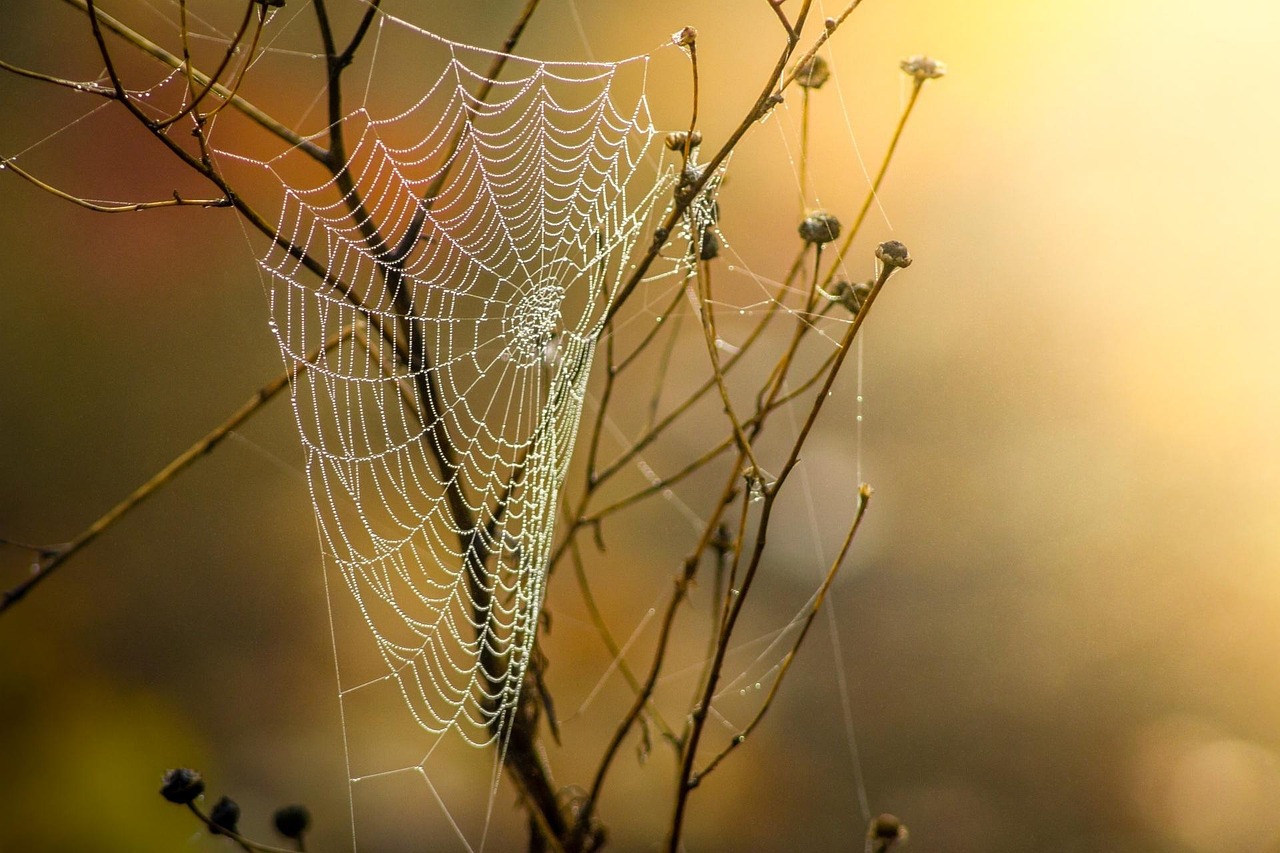
A gleaming moonbeam 
Like a tailor’s sewing room 
Clad in silver threads


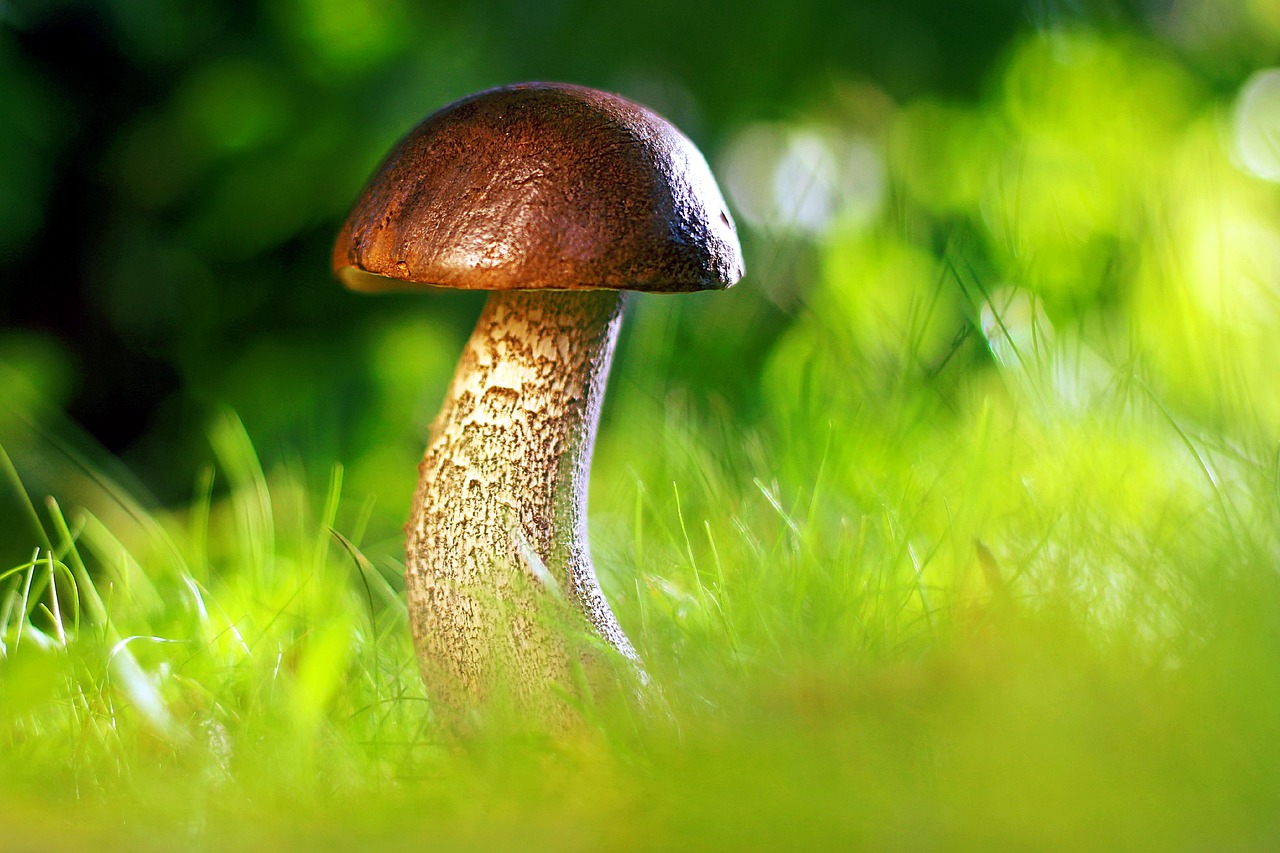
Mushrooms  by Mia (Mandurah Baptist College WA)

Small, tiny, round, brown 
Infests my garden with spores 
But are beautiful


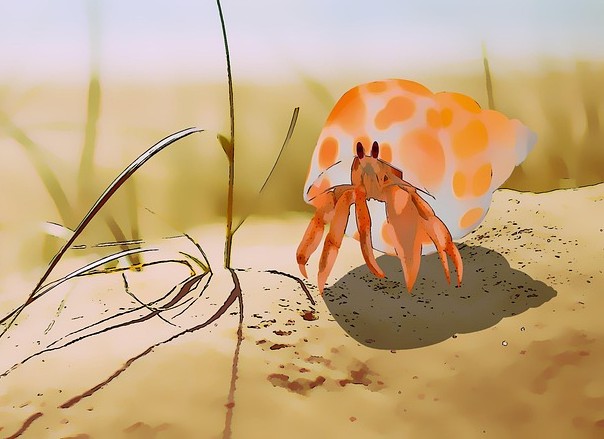
Hermit Crab  by Felicity (Mandurah Baptist College WA)

Tiny, brave and strong 
Watch him scurry in the sand 
Pretty little shell


Coral  by Katelyn (Mandurah Baptist College WA)

Life underwater 
An upside-down jellyfish 
Algae gives colour


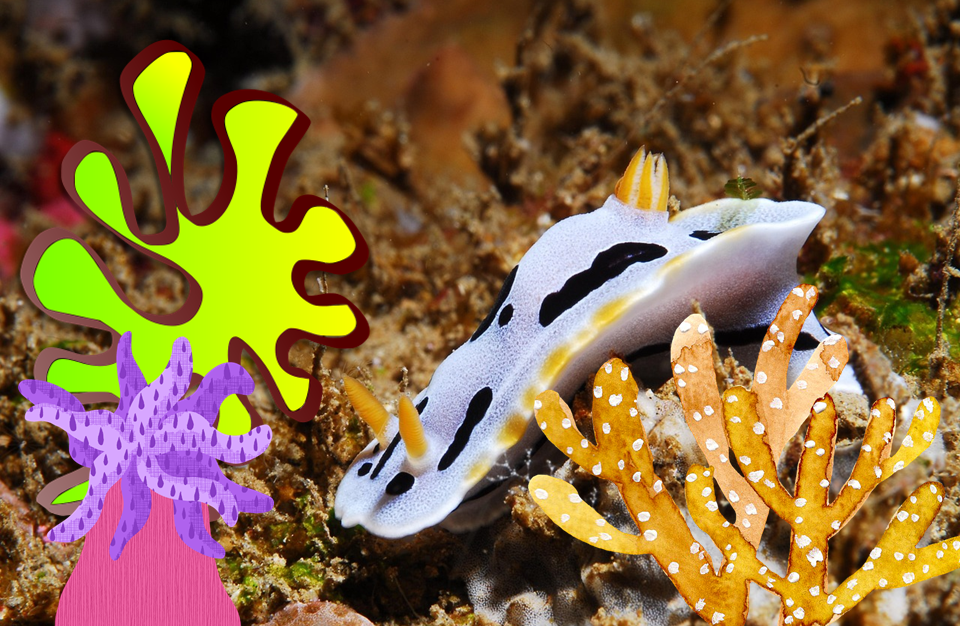
Little Sea Bunny  by Angela (Mandurah Baptist College)

Little sea bunny 
Tiny, small, slimy and cute 
Microscopic pet


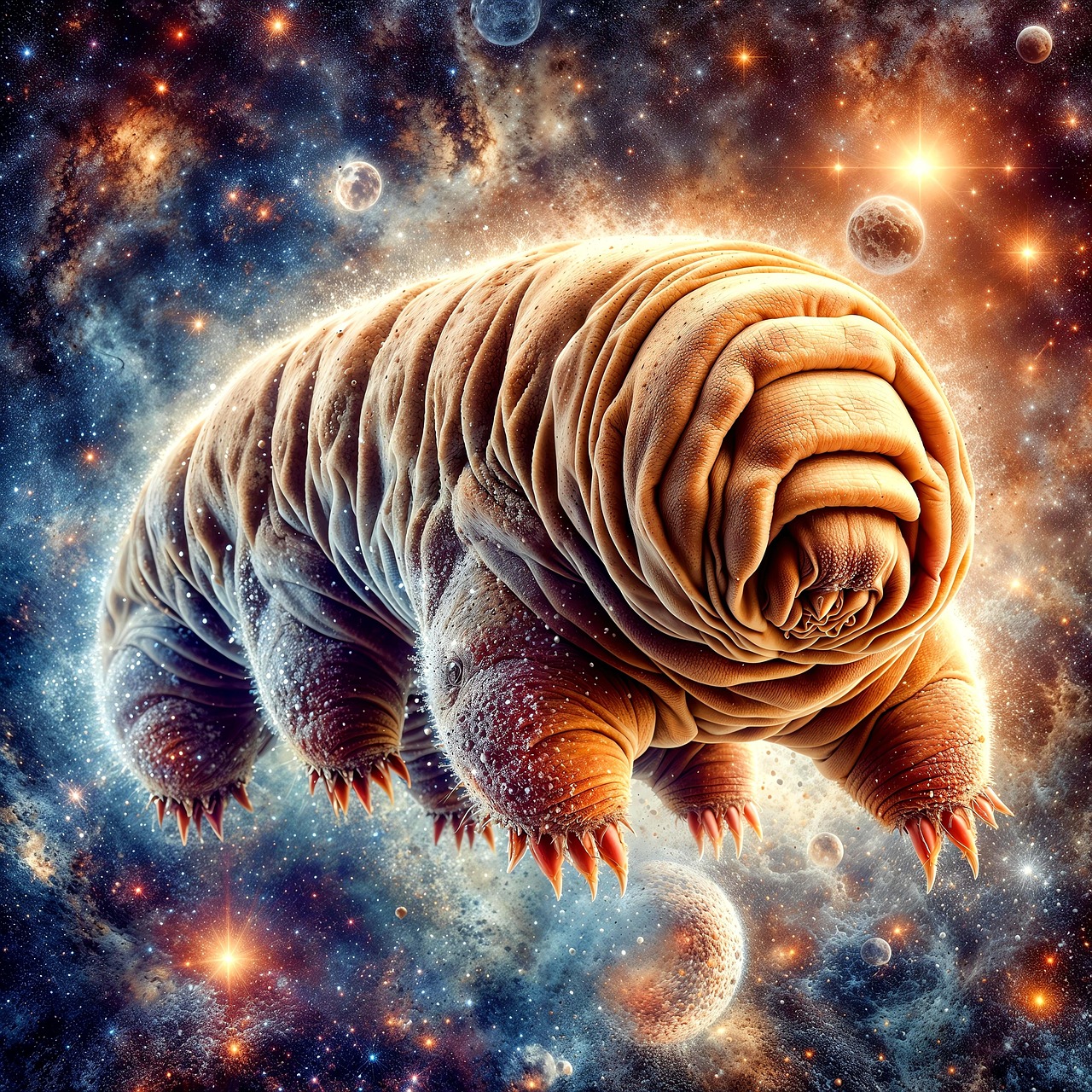
Water Bear  by Destiny (Mandurah Baptist College WA)

Tiny but mighty 
Indestructible you are 
Mighty water bear


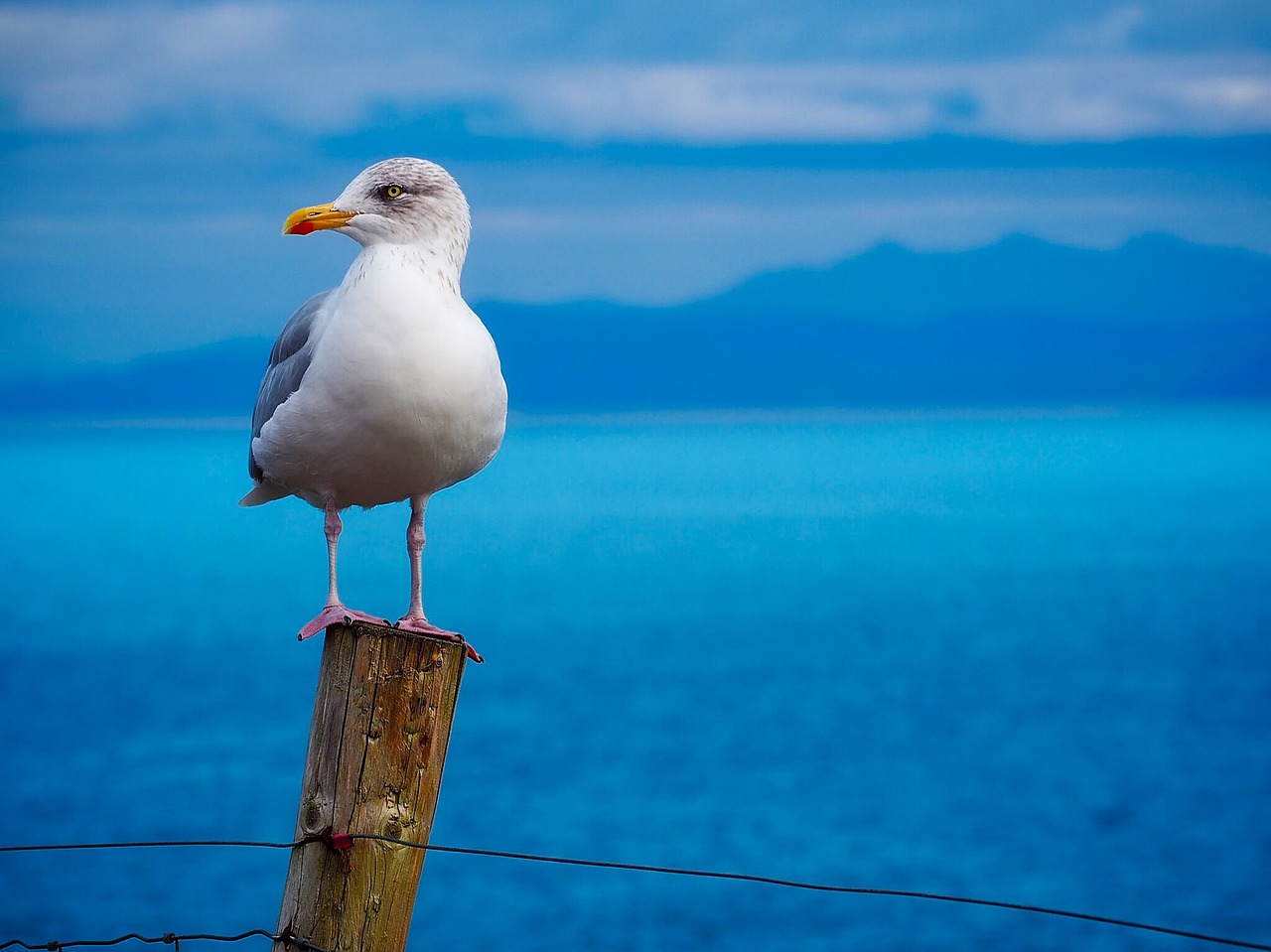
Seagull  by Paige (Mandurah Baptist College WA)

Standing on a post 
Gracefully flying around 
Perfect white feathers


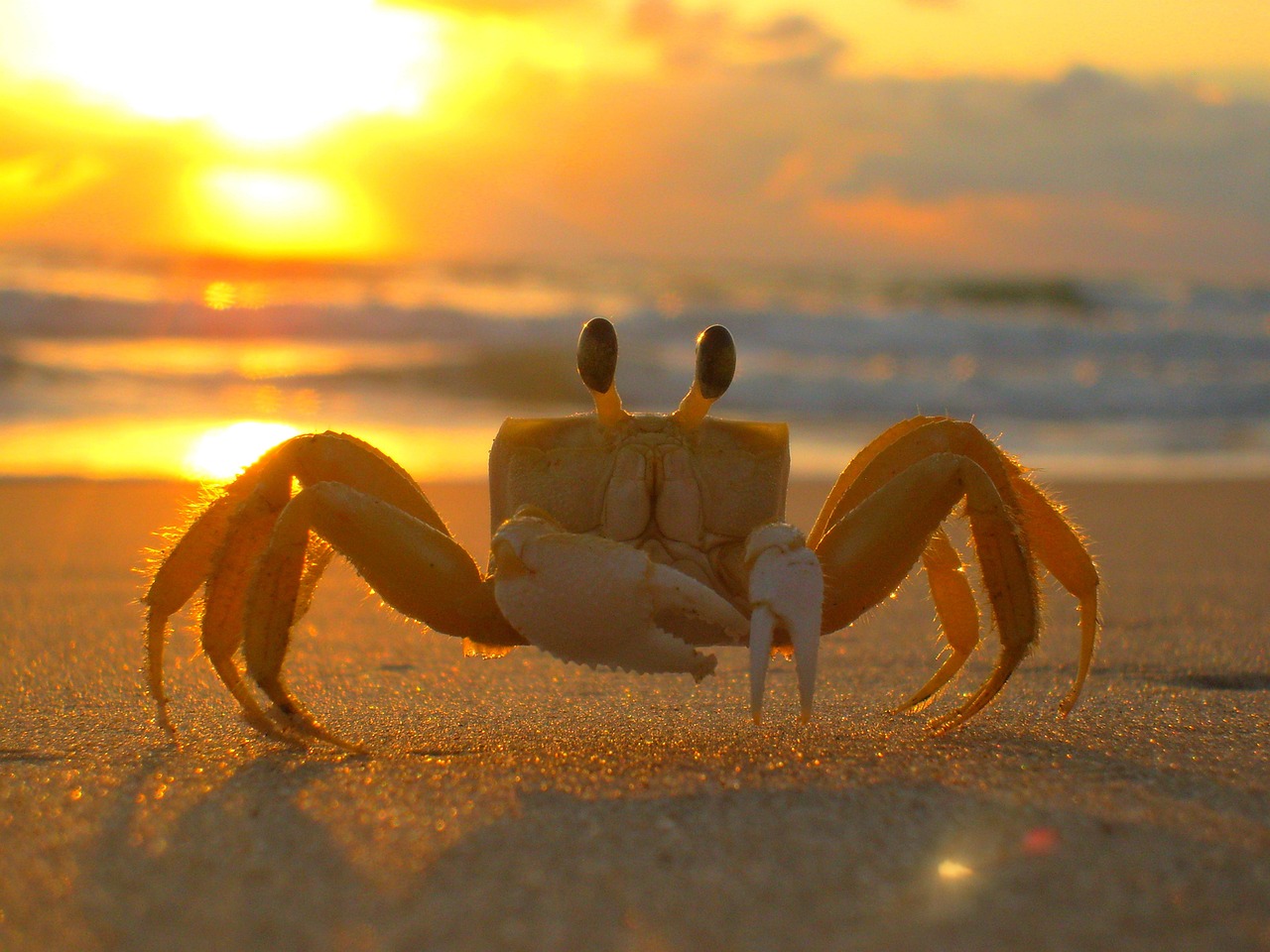
The Hungry Crab  by Evie (Mandurah Baptist College WA)

A small, hungry crab 
Scurries to grab a poor fish 
And gobble it down


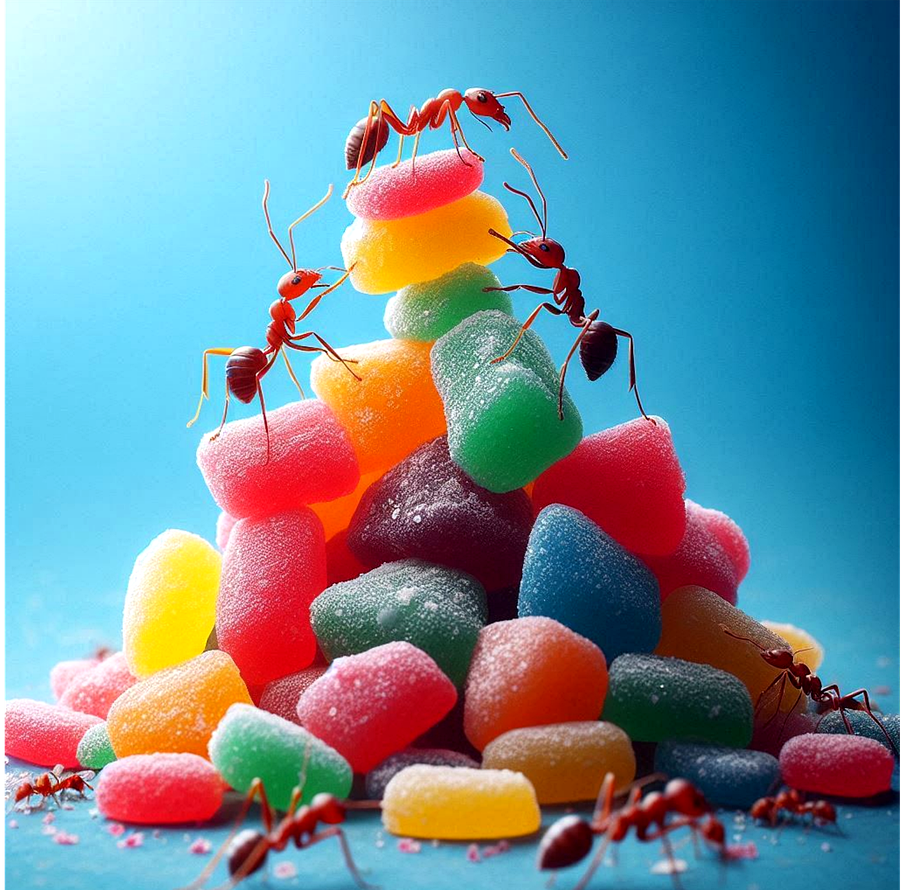
Ants  by Jake (Mandurah Baptist College WA)

Marching through the mound 
Ants are working very hard 
Keeping the nest clean

Thanks Teacher-Librarian Clare Laverty at Mandurah Baptist College for sharing these lovely little Haiku from your students.


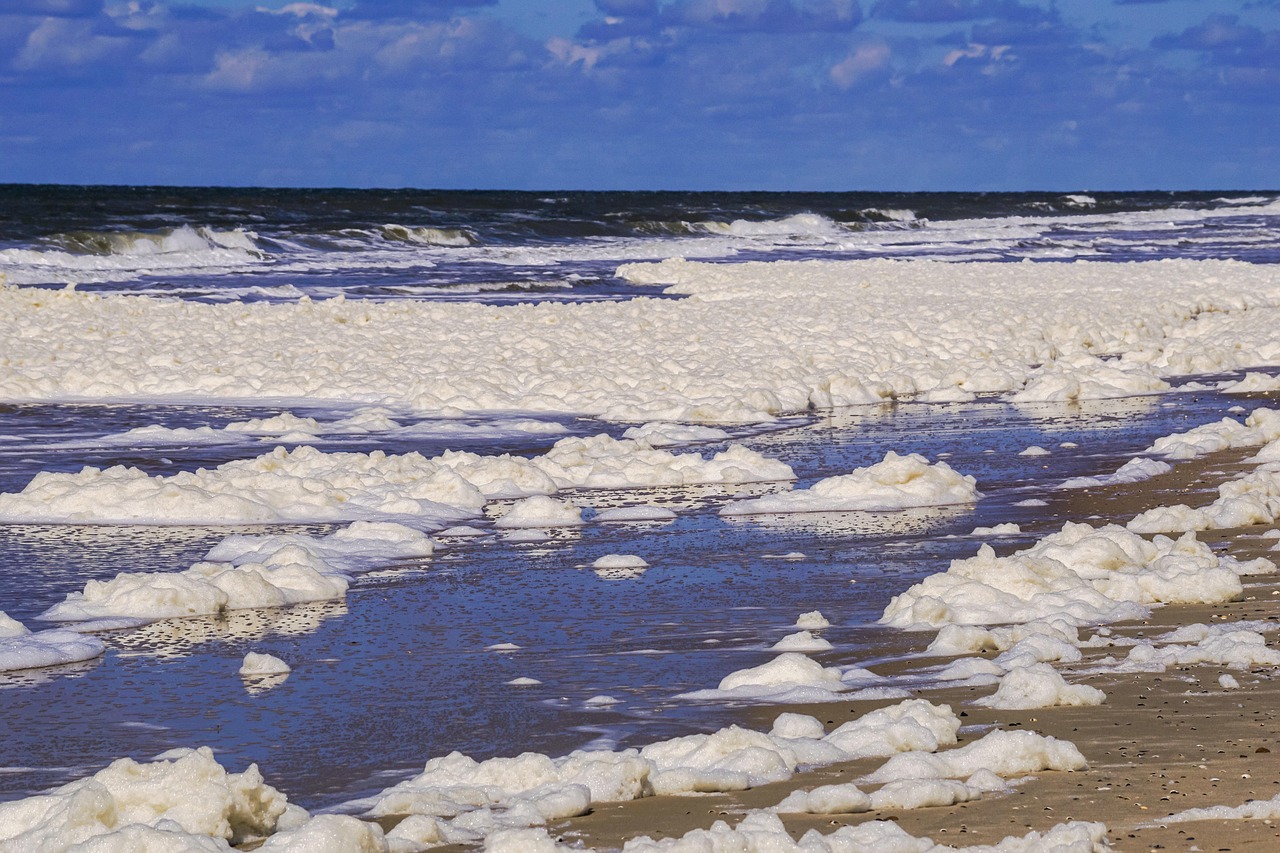
Sandra Winzar’s students at Hilder Road State School learnt about the recent Algal Blooms which have caused devastation along the South Australian coast.  Below are six very touching haikus from her class.

Ocean Algal Blooms  by Alyssa (Hilder Road SS, Brisbane QLD)

Warming oceans shift 
Algal blooms silently spread 
Death has washed ashore


Silent Killer  by Stacey (Hilder Road SS, Brisbane QLD)

Cream bloom litters tide 
Life and light begin to slide, 
Beneath all have died


Waves of Death  by Samuil (Hilder Road SS, Brisbane QLD)

Creamy clouds rain death 
Making sure to take your breath 
Bodies wash ashore


Toxic Foam  by Isabelle & AI (Hilder Road SS, Brisbane QLD)

Temperatures rising 
Creatures wash up on the sand 
Blooms of toxic foam


Grieving Shores  by Bella & AI (Hilder Road SS, Brisbane QLD)

Temperatures rising 
Toxic yellowness blooming 
Silent shores grieving


Whispers of Death  by Dylan, Archer & AI (Hilder Road SS, Brisbane QLD)

Poisons spread through seas 
Fish suffering and dying 
Foam whispers of death

There are concerns around how this large algal bloom will impact the Giant Australian Cuttlefish who lay their eggs in these South Australian waters each August.


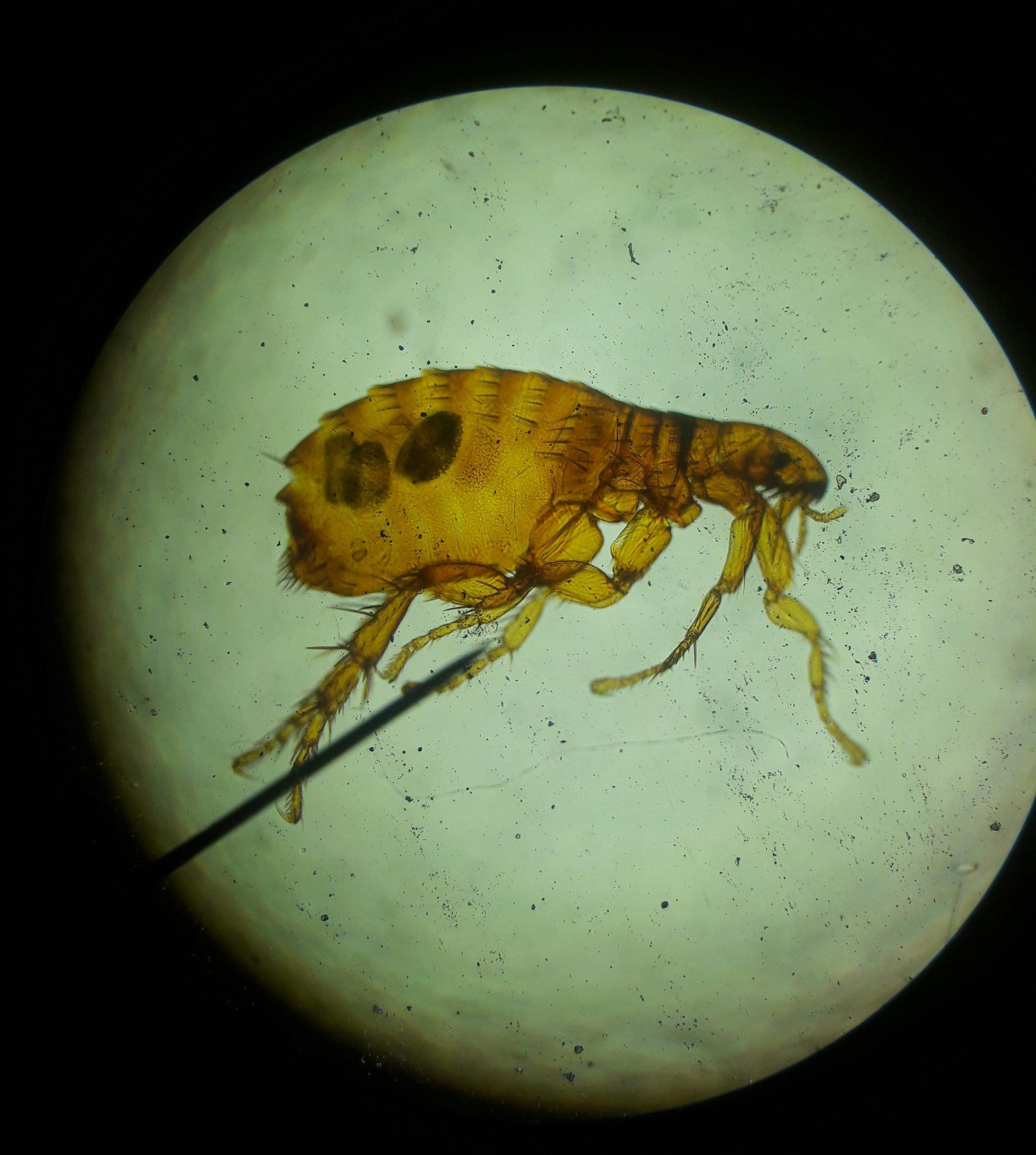
Little Flea  by Sue Warren (Redcliffe QLD)

Tiny hopping flea 
If you please, do not bite me 
Take a flying leap!

Teacher-Librarian, Sue Warren, recently wrote a series of teacher’s notes for a forthcoming non-fiction kid’s book on parasites.  One of the exercises is to write a Haiku … so she did!


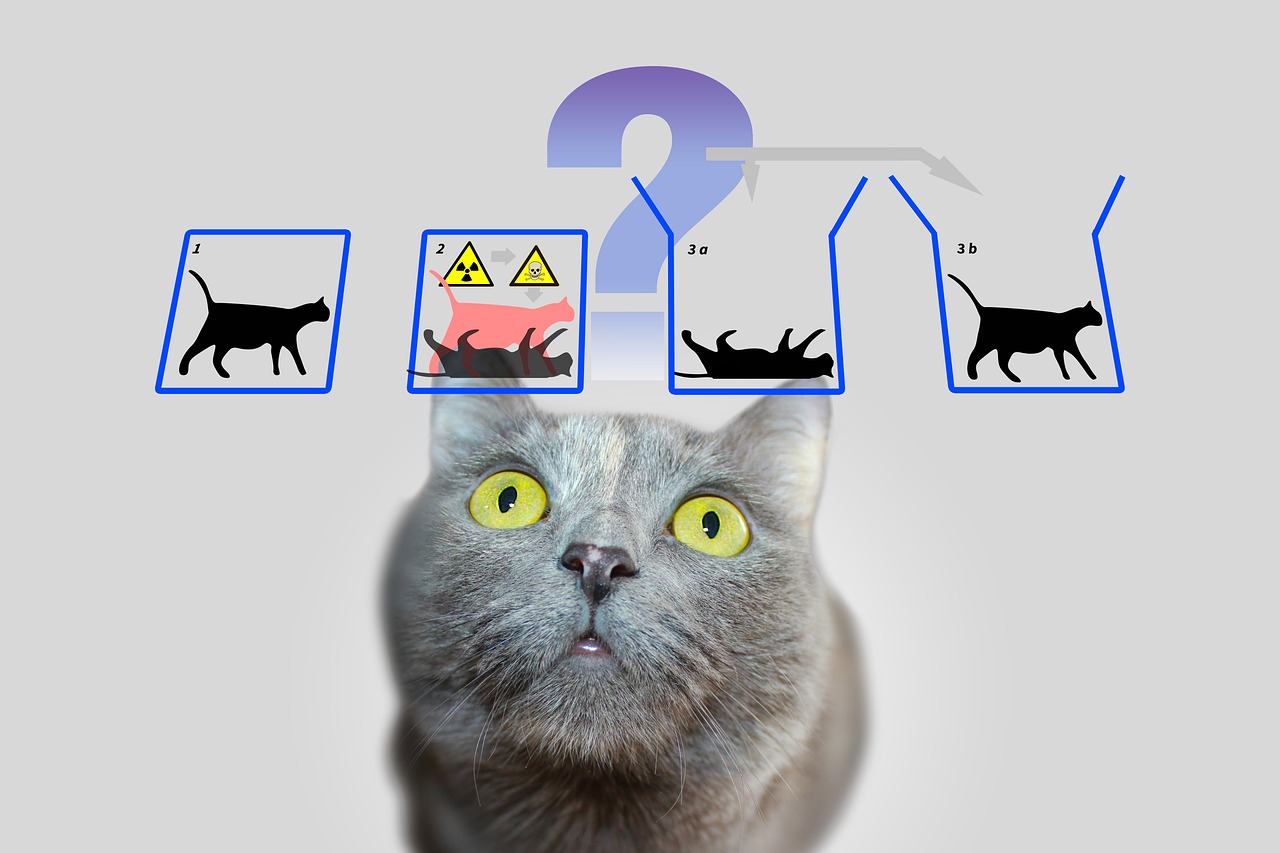
Schrodinger’s Cat  by Tom Middlebrook & ChatGPT (Balmoral VIC)

Cat in the closed box—
is it purring, or silent?
Both, until we look


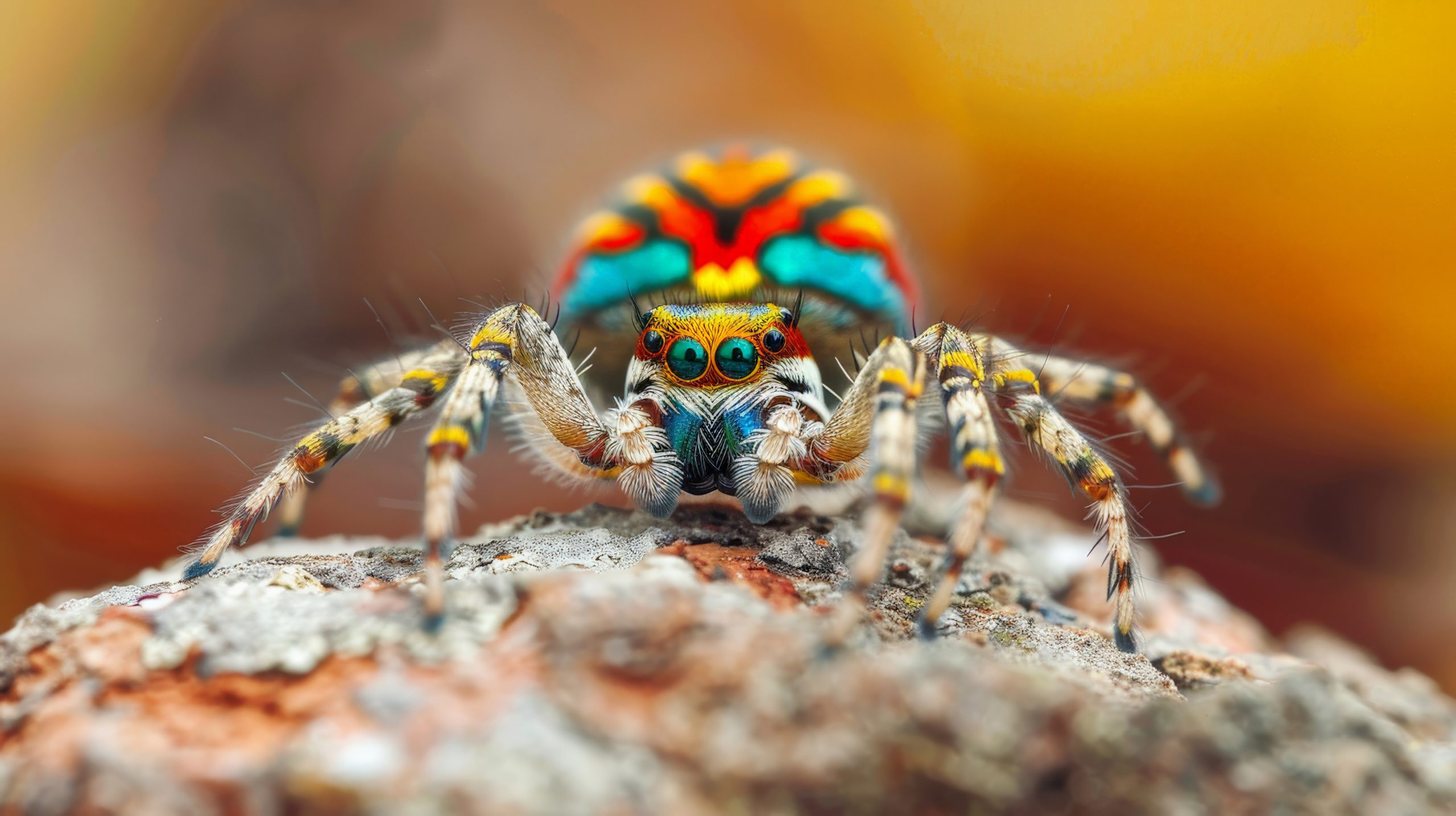
Peacock Spider  by Celia Berrell

Tiny spiders dance –
Snazzy tail and jerky legs
Catch a female’s eye


THE BEAUTY OF IT ALL poem explained

The Beauty of it All  by Celia Berrell

All we can touch, and all we see
began in cosmic history.
How long ago came things to be?
Perhaps it was infinity.

All our surroundings hold in store
the clues to what has gone before.
A fascination long prevails
to understand time’s every tale.

Our tiny Earth holds precious gifts
as through the universe it drifts
with organisms varied, rife,
are we alone in having life?

This special form of energy
enduring in its frailty
bestows such beauty, all admired.
Intelligence is awe inspired.

THE BEAUTY OF IT ALL is one of ten poems from the Environmental Poetry page of the Science Rhymes website (2009).  Guided by James Cook University A/Prof Hilary Whitehouse’s environmental education topics, and Sharon Davson’s spiritual art, THE BEAUTY OF IT ALL was inspired by Davson’s painting Called Away.  The poem and image were published together in Australia’s Macmillan English 7, edited by Sandra Bernhardt (2011), and the poem is now scheduled for publication with Amity University Press, based in Noida, India (2025).

Called Away by Sharon Davson

Called Away is an oil painting of an open book with the makings of a jig-saw puzzle draped over it. The upper section of the puzzle is about TIME and the lower section is about LIFE.  The first two verses of The Beauty of it All are the poet’s responses and questions about TIME.  The second two verses about LIFE.


“Without stardust and starlight, our universe may not have existed.  We now know all the atoms, gas, dust, rocks and substances we can touch and see probably appeared as a result of a ‘Big Bang’, believed to have happened 14 billion years ago.”

All we can touch, and all we see began in cosmic history.


“Before scientists and astronomers came up with 14 billion years as an age for our universe, some people thought it was around six thousand years old, while others believed it had no beginning or end.  Maybe the ‘Big Bang’ was just one of many ‘Big Bounces’; or perhaps we live in a Multiverse!  Despite our universe’s age-estimate being 14 billion years, we can still choose to think that some version of our universe may have existed forever – for infinity.”

How long ago came things to be?  Perhaps it was infinity.


“Since fossil hunters and geologists began finding bones of extinct animals such as the dinosaurs, and other fascinating facts about the cosmos going back in time, scientists have continued to collect plenty of clues and evidence.  We’ve discovered many things about significant environmental and historical events here on Earth and beyond.”

All our surroundings hold in store the clues to what has gone before.


“Our insatiable human curiosity means that many of us want to find out even more!  More about what has happened in the past (through studying things like rocks and stars), and what future conditions may be (through including computer models and Artificial Intelligence to crunch all our discovered information).”

A fascination long prevails to understand time’s every tale.


“Since Astronauts ventured into space, especially with travelling to the Moon in the late 1960’s, we have had the precious privilege of seeing what planet Earth looks like from afar.  In the scheme of the Solar System and the cosmos, IT’S VERY SMALL!  And as far as we know, it may be the only place where living things exist.  But that question bugs us no end … do we really want to know the answer?  It could be scary – either way!

Our tiny Earth holds precious gifts as through the universe it drifts
with organisms, varied, rife.  Are we alone in having life?


“Through our knowledge of fossils, ice, rocks and extinctions, we have begun to realise that our planet’s environment can change – sometimes dramatically.  We now understand that life on Earth was almost completely wiped out a number of times. Life is really rather fragile!”

This special form of energy, enduring in its frailty,


“But we only have to look around us, in nature and out to the stars, to see that we are supported and surrounded by stuff that is truly fantastical; sometimes inexplicably crazy; inspiring; puzzling, yet frightfully gorgeous.

Bestows such beauty, all admired


“But does that garden snail see the same wonder as a human being does?  No.   Our awareness, sentience and magical minds give us the ability to REALISE HOW AWESOME nature really is!  Your pet dog might howl at the moon sometimes and delight in sniffing the weirdest smells, but even such closest creature relatives can’t see the world quite like us.  We have our intelligence to thank for that.  And either, with or without science in your hearts, THE WORLD IS AMAZINGLY AMAZING!!!  So, please try not to take it for granted.”

intelligence is awe-inspired.


The Garden Within is on YouTube

I recently had the opportunity to attend a free workshop about creating YouTube videos, thanks to the Hervey Bay Neighbourhood Centre’s ILLUMINATION programme.  I originally shared 8 poems from The Science Rhymes Book on YouTube in 2011.  But when YouTube merged with Google, I somehow lost access to this account.  At the first of four workshop sessions, Aaron from Pierson Media kindly took the time to reconnect me with my YouTube account.  Duly motivated, I decided to recite The Garden Within for this workshop project.

Why The Garden Within?  Because in 2019, I discovered this poem (which features on the Environmental Poetry page of the Science Rhymes website) had been published in an Indian Government School Textbook, possibly since 2014.  In a previous blog, Give & Take: The Garden Within, I mentioned this and explained how this spiritual rhyme came about.  That was after delivering this as a speech at a Toastmasters contest.

I was disappointed that The Garden Within poem had been used so extensively without requesting my permission.  I sent rallying letters to what I hoped were appropriate Indian Government departments, libraries, the book’s printer and even the Indian Embassy.  My letter asked for an apology and a copy of the book.  But no reply has been received at this stage.  Meanwhile, someone who heard my speech asked a favour of a friend who was visiting India.  I now have a hard copy of the 2020 edition of this school textbook, Our World Through English Class VIII, from the State of Telangana, for which I express my deepest thanks to those kind travellers.

I hope you enjoy my workshop YouTube recital of The Garden Within.

While preparing to share this poem’s story at the Society of Children’s Book Writers and Illustrators (SCBWI) panel discussion at Cairns Tropical Writers Festival 2024, I searched the internet and found plenty of YouTube videos about The Garden Within.  Mine is just one of many!

Here are some others:

A LESSON explaining how to interpret the poem by Prathibha (2017)
P. J. Manilal made it into a SONG (2017)
The song became a DANCE (2020)
Another LESSON by VKT English Tutor (2021)
Digial Teacher’s Lesson forgot to mention the name of the poem’s author (2021)
So did Eduzon.in (2023)

Perhaps this poem is on a similar trajectory to Jane Taylor’s The Star (1806).  Fondly sung as the nursery rhyme Twinkle, Twinkle Little Star, we rarely acknowledge those who created it (Jane and Ann Taylor).  The Garden Within has forged a life in the public domain without me.  Recently translated into Chinese & Korean, it appears to be determined to explore the world all by itself – sharing love and gratitude along the way.

The Garden Within by Celia Berrell was inspired by spiritual artist Sharon Davson’s oil painting With Gratitude Comes Growth, housed in the Hikaru Museumin Takayama, Japan.