OUR FLORA-VERSE
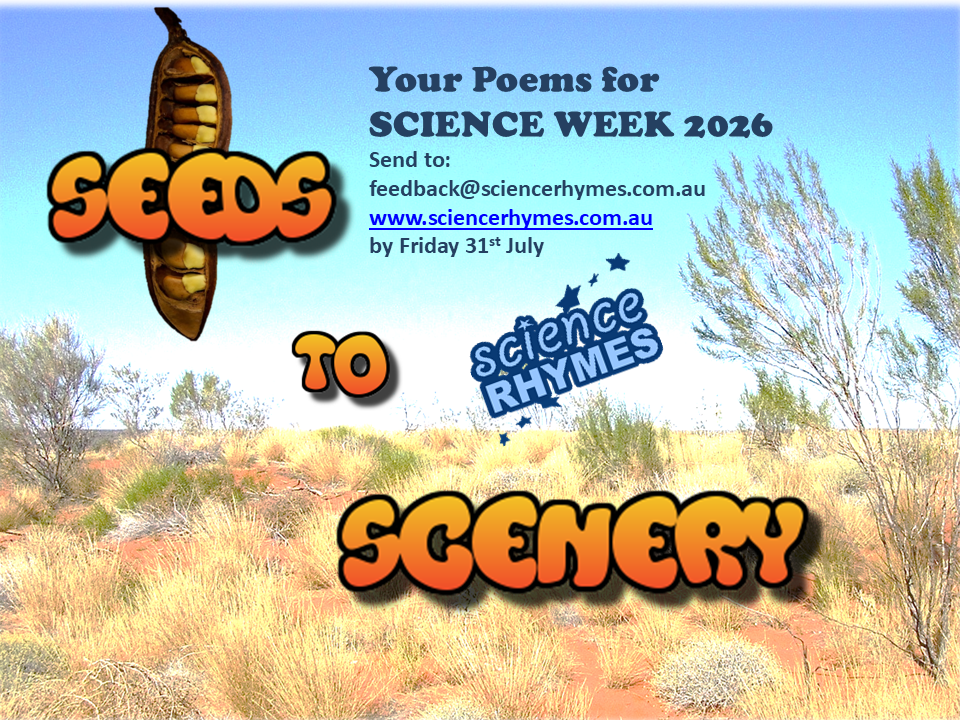
We celebrated this year’s National Science Week with a collection of your rhyming verse poetry about SEEDS TO SCENERY, covering many science concepts about plants. One regular poet is Sukarma Thareja, a Professor of Chemistry in India. Sukarma’s knowledgeable and fascinating perspective on science, makes for intriguing poetry topics. I helped make the rhymes stronger. Here is our joint poem from OUR FLORA-VERSE:
Seed-to-Tree Action by Sukarma Thareja & Celia Berrell
I’m a very small seed
and hidden in me
is the plan that I need
to grow a great tree.
I don’t need to see
the whole of me,
just read DNA
like a book about me!
Page one says, “please start”.
That gives me my height.
Page two: “grow this fast”
for slope – that’s my rate.
Page three: “start to bend”,
my curves will begin.
You see, all instructions
are hidden within.
Height, slope and bend
are just the beginning
of functions, instructions
that keep our tree growing.
In Maths, this is called
a Taylor Expansion –
growing the shapes
for seed-to-tree action.
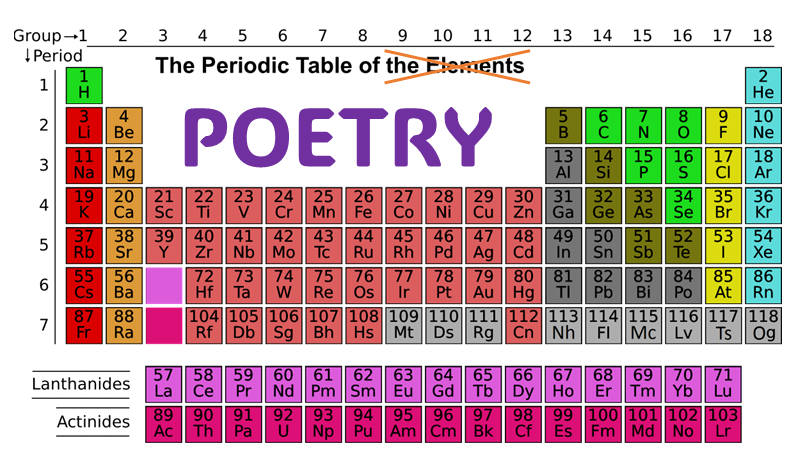
This anthology, by Lerner Books USA, will collate the best contemporary poems for children, showcasing 27 different kinds of poetic techniques, such as wordplay, onomatopoeia, and repetition. My concrete/shape poem OCTOPUS will come under the elemental category of “White Space”. I was invited to submit for this book by SCBWI associate and co-editor, Charles Waters. 900 poems were received during the 72-hour window for submissions in late 2025. Scheduled for publication in early 2028, all good books take time!
CAIRNS VISIT
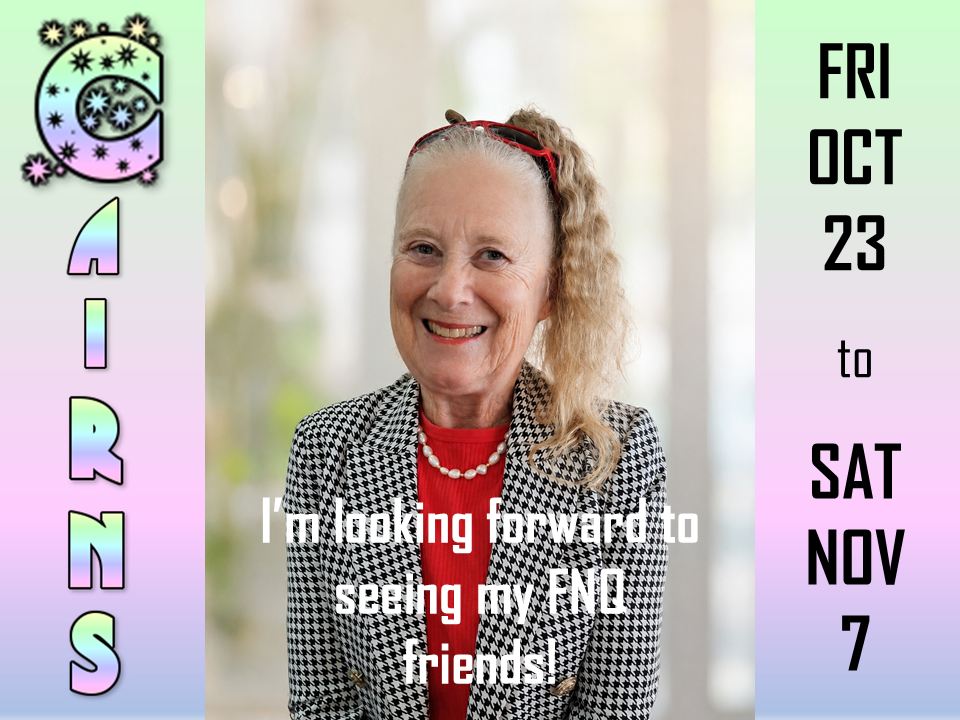
I’m heading to Cairns on the Spirit of Queensland in October to attend the Toastmasters Area 9 Conference (Saturday 24th) and hope to catch up with many friends, including writing buddies from Cairns Speakers, Tropical Writers, and the FNQ chapter of SCBWI Australia East.
Last year, I participated in an Edinburgh Napier University course Science Communication Through Poetry (along with 70 other scientists and/or poets), conducted by Professor Sam Illingworth. Sam is an enlightening Science Communicator. Heading into this year, he has been busy sharing invaluable information about the development of AI tools and their impacts through his very successful Slow AI curriculum. The onslaught of AI developments is rather overwhelming stuff so, I was relieved to discover his eBook, Slow AI: Knowing When to Use AI and When to Leave it Alone. It’s recommended reading for almost everyone – whether you love or hate, engage or avoid using tools such as LLMs like ChatGPT.
Some thoughts on AI:
- Artificial Intelligence is more a marketing term than a comprehensive description of this whole spectrum of tools and their technologies. It’s clever stuff, with incredible potential – particularly in crunching data and finding correlations. But that doesn’t make it intelligent or conscious.
- As writers, we can use AI tools to assist with editing, formatting and research (always checking for errors), without cheating. Think of it as Spellcheck Superman. However, in order to be able to declare and prove writing is our own work, we now need to keep a log of its progression plus when and how AI was used in its evolution.
- AI generated images (as well as stories) steal work from illustrators (and writers). Organisations such as SCBWI now expect members to remove any books containing AI generated artwork and/or text from their platforms. Think of how portrait artists lost their livelihoods due to the rise of photography. Only the exceptionally talented famous few earn a living this way. Nowadays, we all use our phone cameras to generate treasured portraits instead.
- For Social Media posts, I would never employ a graphic artist. I simply work with what I can do myself (which may include using AI-generated images these days). But when it comes to publishing a book, quality human creations are the most rewarding and only ethical investment.
VIBES UNDER THE SEA
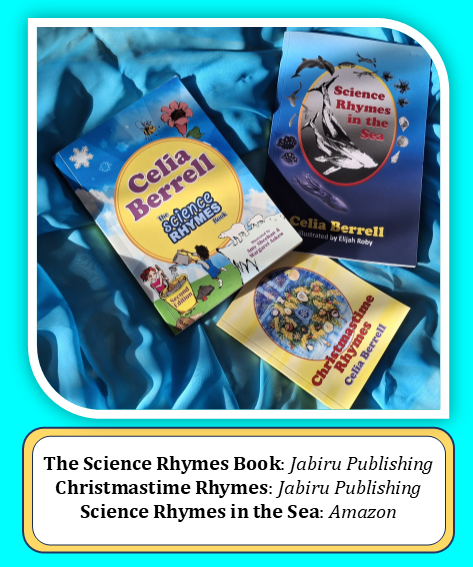
Hearing someone else recite my poems is always a great honour – and gives me goosebumps! Retired CSIRO scientist Craig Proctor is a radio presenter in Hobart, hosting VIBES UNDER THE SEA at Print Radio Tasmania. He rang out of the blue last month and ended up reciting DO DOLPHINS KISS and DIVE LIKE A WHALE from my latest book, Science Rhymes in the Sea on his programme. I’ve added his recording below. Thanks, Craig for your luxurious poetic rendition!
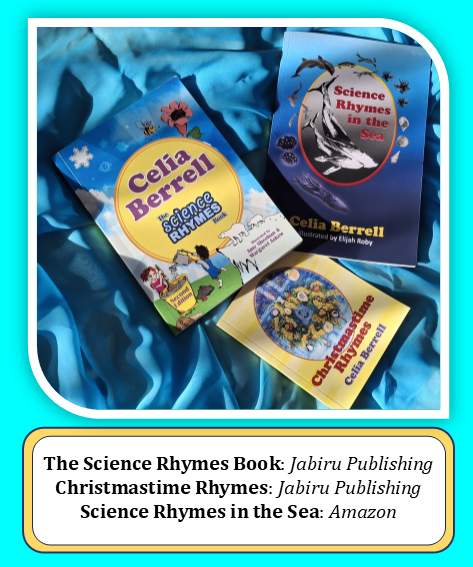
- Science Rhymes Bookshop has book details
- Bits and Pieces has previous newsletters