Subscribe to Blog via Email

Enter your email address to subscribe to this blog and receive notifications of new posts by email.

Your Poems 2016

Flight and the Environment feature in this year’s poems:

Feathers for Flight  by Harmonie
Whitfield State School

Birds are feathered, birds are lightFeathers in Flight
Their wings are wide; their legs are slight
Their eyes give them superior sight
But how does this all aid their flight?

Their contour feathers catch the breeze
And help them ride the draught with ease
Some pretty plumes are made to please
While down makes sure those birds don’t freeze!

Their feathery wings can fan out wide
In order to assist their glide
But when those feathers want to hide
They come to rest on either side.

Protruding peepers both are set
On either side of a birds head
These eyes don’t see just straight ahead
But each side and behind instead!

My fact-file’s not yet reached its close
To ensure your avian knowledge grows
Did you know that each bird owns
A set of lightweight hollow bones?


My Flying Bubble  by Coco
Whitfield State Schoolflying bubble

Once upon a flying time
Atop my little roof
A bubble gave a muffled chime
By popping with a poof!

Its soapy droplets sprinkled down
And cleaned my jewellery.
And if I was a dusty crown
Now sparkling bright I’d be!


Busy Buzzing  by Ava
Whitfield State SchoolBusy Buzzing work

I’m buzzing past
an apple tree.
You’re stuck in the grass
and can’t squash me!

Gravity
pushes you to the floor.
With wings so pretty
I move much more.

A flower or five
sucking nectar that’s runny
then back to the hive
to make more honey.

When Keeper is through
taking our wax
and honey too
we’ll buzz GIVE IT BACK!


A Long Way From Home  by Jonathon
Whitfield State SchoolLong way from home

The Moon is dipping out of sight.
My spacecraft is currently in flight
orbiting Earth so very high
like a diamond in the sky.

Travelling towards the stars
the only planet in sight is Mars.
But soon my flight must come to an end
so I can spend time with my friends.


Rainbow Birds  by Tabitha
Whitfield State Schoolrainbow birds

Graceful creatures in the sky
flapping their wings as they fly by.
Circling, soaring into the blue
glimpsing the ground in tiny view.
Glimmering in the sunlight’s kiss.
Radiant in their blue abyss.


In a Flap About Flight  by Evie
Whitfield State SchoolFlight Evie poem small

Although mankind has conquered the skies
with aeroplanes of every size,
despite our best scientific gains
we’ll never fly as well as planes.

It seems our bird-winged counterparts
have the ideal body parts.
A balance of wingspan, weight and strength
makes perfect engineering sense!

Hollow bones are strong yet light.
No wonder they are good in flight!
With an extra air sac on their lungs
a bird breathes better than anyone.

Yes, we humans grow tall and strong
but our weakly wingspan is all wrong.
As much as we’d like to get it right …
humans were never designed to take flight.


Cane harvest kites  by Helen Ramoutsaki

caneharvest kites by Helen Ramoutsaki s


Dr  Sukarma Rani Thareja is an Associate Professor of Chemistry at Christ Church College, CSJM Kanpur University, Kanpur, India.  She took the photo accompanying her poem near her home, depicting the first rays from the morning Sun encountering a pollutant in our atmosphere.

A Pollutant  by Sukarma Rani Thareja & Celia Berrell

An uninvited guest in our atmosphereA Pollutant
touches my face
taunting me.

“When are you leaving uninvited guest?”
I’ll count days on my fingers
and then make a wish.

When I was a child I remember being told
“Don’t cook your tea
with wood on earthen stoves.

Don’t throw garbage onto the roads
contaminate our rivers
like an uninvited guest.”

Now I am old  see through watery eyes.
My footprint ecological
has grown in size.

Somehow I’ve become an uninvited guest.
I’ll count days on my fingers
and then make a wish.


Just over ten years ago, the town of Picher in Oklahoma USA was declared the most toxic place in America. It used to be a lead and zinc mining area, but the region’s natural water supplies became so poisoned with mining waste, the local creek turned red and the town’s residents became ill. Everyone had to leave.  Sarah Roehrig says her new poem, inspired by these events at Picher, is a ballad about the environmental and social impact of mining.


Tar Creek Runs Red by Sarah Roehrigthe-magic-sprig-exmoor-010

Heavy, heavy song.
Rosebuds recycle rain.
Move the people upstream
And the voice of pain.

Repeat, repeat, mountains recoil
Dead like the Queen of the Nile
Pitchers of souls mine the coal
Smile a smile all the while.

The backhoe pulls, rolling right
Cut through the plug
Blood stains the biting clouds
Move the artificial light.

There is no beauty nor rest here
Rivers of blood
Cold mechanical lies
Drag through the mud.

Ashes fall, the fire is lit
One day they will arise
Spirit through bones, rhythm so strong
To hear their troubled cries.


Joel is 25 and believes as long as we stay true to ourselves, we will succeed in life, however crazy it may be. Thanks for sharing this touching environmental poem with us Joel.

Return to What Should Be  by Joel Ewingwater moss

All the tears I’ve tasted
for so many trees we’ve wasted.
It makes me wonder; wonder why
so few of us will ever try
to relieve mankind of ignorance
and shake us from this foolish trance.
Living the way some people are,
every day creates a scar.
Although our Earth is vast and great
at healing, making all things straight,
there’s no time for the world to wait
while we create a toxic fate.
Perhaps one day mankind will see
significance in every tree;
clean rivers flowing to the sea;
with everything as it should be.


Reinhold Mangundu is an environmental activist in Namibia and youth advocate.
He writes blogs and has just started to write environmental poetry too.

A Call for a Cure  by Reinhold Mangundu & Celia

Our world really needs yousunset
to come to her rescue.
To work on a clue
of what we can do.

Our fumes give her fever;
a heat-rising danger.
Her life-blood of rivers
are choking with papers.

We’re losing more species
by chopping her fine trees
so birds are distressed
with nowhere to build nests.

Our world really needs us;
a people that she trusts.
Please work on a clue
of what we can do.


In Conversation – August 2016

For a while there, I imagined I was famous!CB-2 small

Talking with Rob Farquhar about some of the milestones that led to a modest income from my literary passions was a great honour. Rob is a fellow writer and accomplished Paid To Play Podcast host. If you have time, please check it out HERE. I hope we connect along the way – through topics including wild flowers and sci-fi writers, to the life-changing empowerment afforded by a health scare.

Informally, this is the tenth anniversary of my poetic journey which became Science Rhymes.  There’s always a present for you on the Science Rhymes website! My appreciation goes to the network and support received from talented friends and associates of many ages. And the necessary bravery and enjoyment for this interview process was thanks to my participation with Mt Sheridan Toastmasters Club.

PAID TO PLAY PODCAST: Celia Berrell, Science Poet: Episode 92

Flight

Can you write a poem about FLIGHT?  It could be about birds, insects, the freedom of flying, aircraft or even spacecraft.  To help you get inspired and in a slightly scientific mood, here are two 10 minute presentations combining science, poetry and pictures.  The Science & Poetry of Flight 1 is a PDF about FLIGHT IN NATURE.  The Science & Poetry of Flight 2 is a PDF about MAN-MADE FLIGHT.  These presentations were part of a Poetry Club project at Whitfield State School in Cairns, for Year 5 and Year 6 students.  We are now creating a collection of poems about FLIGHT and invite you to take part to help us celebrate National Science Week (13-21 August)!

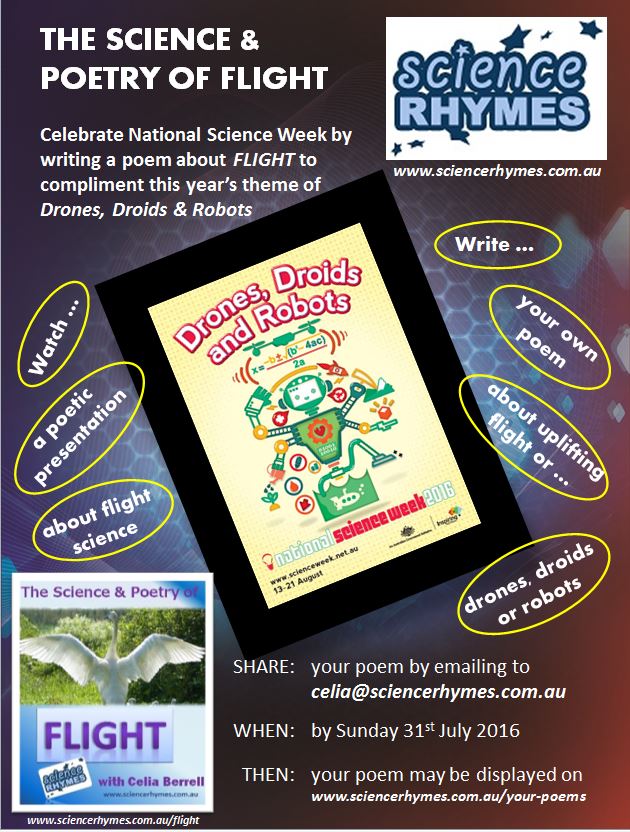
2016  SRNSW poster

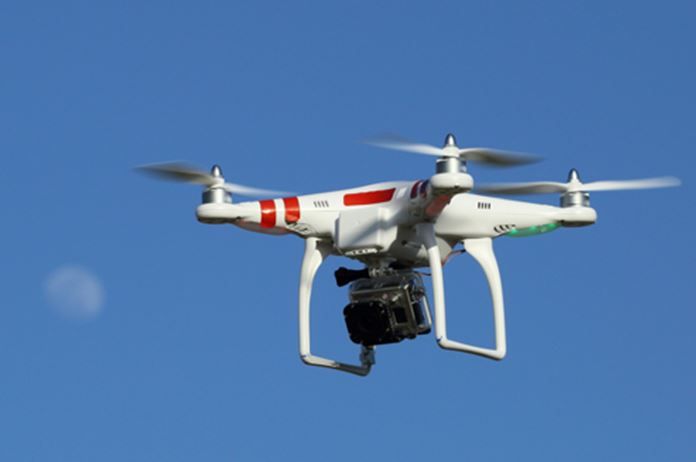
Homing in on DRONES

DroneThis year, National Science Week has chosen to feature the technology breakthroughs we are experiencing with drones, droids and robots. Science Rhymes is focusing on fantastic flight in all its forms. So here are some links (many include videos) about drones – to fire you up and help you choose your own flight of fancy!  My favourite video is Loon Copter :)

  1. Drone crashes into Empire State Building in New York http://www.bbc.com/news/technology-35525702
  2. Learn to be a Drone Pilot at a training school in the UK http://www.suasnews.com/2016/02/41765/
  3. Loon Copter flies, floats and swims! http://www.suasnews.com/2016/02/looncopter-wins-us-1-million-in-dubai/
  4. MegaKopter lifts over 60kg http://gizmodo.com/giant-voltron-drone-lifts-134-pounds-for-a-new-world-re-1754062725
  5. TV presenter Jeremy Clarkson advertises Amazon’s proposed fast delivery by drone. https://www.youtube.com/watch?v=MXo_d6tNWuY
  6. Can we really make a drone that’s the size of a drone (bee)?  https://www.youtube.com/watch?v=a6e8e0HR5pE
  7. Solar-powered sea-floating drones can hunt in packs, looking for submarines: https://www.newscientist.com/article/2083345-submarine-hunting-drones-take-off-and-land-on-water-vertically/
  8. CBS News has a collection of articles about drones: from drone-racing sports, to drones being more of a hazard than a help. http://www.cbsnews.com/drones/
  9. Dutch Police train birds (hawks) to remove hazardous drones from their skies! http://www.abc.net.au/news/2016-02-02/eagles-vs-drones-dutch-police-train-birds-to-take-down-uavs/7132096
  10. Snot-Bot is helping save the whales: http://www.dailymail.co.uk/sciencetech/article-3197623/Could-snotbots-save-whales-Drones-collect-mucus-sprayed-cetaceans-blowholes-hint-stress-levels.html
  11. Drones will be used in Australia to help fight fires and other disasters: https://www.nsw.gov.au/news-and-events/news/drones-to-assist-firefighters-in-emergencies/

Double Helix Book Review

Celia Berrell’s Science Rhymes is quietly collecting book reviews! It is a great honour to receive a positive review, because someone took time to read this book and then compose a thoughtful response. A big “thank you” to all those reviewers! If you ever have the time to share your own comments or review about this book, or the Science Rhymes website, they will be most graciously received.

Double Helix 7 15 Apr 16 SR Review

The latest book review is by school student Leo Marland. It appears in Issue #7 of CSIRO’s Double Helix Magazine. Congratulations Leo on having your kind words printed in this fantastic publication!

In 2015 school student Harmonie Larsen’s review was published in the Cairns Post newspaper’s “Post-Ed” section. Harmonie has a selection of science poems on this website (including the first guest blog about the Mangrove Army).

You can purchase the hard-copy version of Celia Berrell’s Science Rhymes on-line from Harley’s Educational or in-store at Collins Booksellers, Smithfield. The Kindle eBook version is available through Amazon.

Cairns Post Ed 2015


A fellow poet from USA, Kevin D Taylor (author of The Cosmic Oddball) gave the first Science Rhymes review, providing fatherly approval and encouragement for author and reader alike.

Mangrove Army

Do you care about the ecosystem? I do! My name is Harmonie Larsen and I am the “founder” of the Mangrove Army. This is an organization that takes care of mangroves by looking out for illegally removed and damaged mangroves.

We are ordinary people with a difference – we care. We want to help out however we can. We want to get Mother Nature back on her feet, and we are doing this because we can.

You can join the Mangrove Army by sending in a report about a damaged mangrove, a bare bank or someone illegally removing mangroves. The Mangrove Army does not require payment to be a member, just commitment to keeping a lookout for damage to our ecosystem.


Mangrove Army  by Harmonie Larsen

Long, winding branches reach for the skyMangrove2
Like tall spindly animals stretching their necks
Mangroves that sway with the slightest of breeze;
these are the trees that we try to protect.

We need a group that will strive to defend
These beautiful, perfect and delicate trees
For they are important, they’re crucially vital
They are the plants that everyone needs.

So the Mangrove Army must work to protect
These trees that are so important for all
They protects our animals and cover our banks
We need your help – so answer the call …


Mangrove Army lectureHarmonie presenting her Mangrove Army concept to an audience at James Cook University in 2015


Proving Gravitational Waves exist

abstract-wavesWe used to think space and time were two separate things … until Albert Einstein challenged our common sense with his Theories of Special Relativity and General Relativity. He declared space and time are inseparable, creating a four-dimensional “fabric” made from three dimensions of space, and a fourth dimension of time.

Einstein gave us his Theory of General Relativity in 1915, but it has taken decades to prove his theories about space-time. Back in 2007, NASA’s satellite Gravity Probe B showed that the Earth really does distort the fabric of space-time.

Imagine the Earth is a big marble, sitting on a rubber sheet (representing four dimensions of space-time). The Earth-marble’s mass makes the stretchy fabric sag in the middle. A smaller Moon-marble trundling by, gets drawn towards the lower parts of the space-time fabric. Instead of travelling straight past, it curves into an orbit round the Earth. But imagining is not the same as proving. That takes clever tests and measurements.

So what happens to this space-time fabric when the Earth is spinning? Einstein suggested this would cause GRAVITATIONAL WAVES, little ripples in the space-time fabric. Well, last September we found one! It’s only recently been announced as scientists had to carefully check their data first.

They discovered a series of eight gravity waves (caused by two huge black holes spinning around and into each other) by using lasers and mirrors at the Laser Interferometer Gravitational-Wave Observatory. LIGO is a system of two specialised telescopes. Instead of detecting light, they detect gravity waves. One of LIGO’s detectors is in Louisiana, the other in Washington USA.

Scientists and Einstein fans know that LIGO’s gravitational wave proof is a fantastic milestone for science. And will probably lead to new technologies, as well as enriching our understanding of the universe.

To celebrate poetically, here’s Gravity Waves and a link to The Gravity Poem by Cassy Lawrence with a video, courtesy of HSE Docs UK.

Gravity Waves by Celia Berrell
(Einstein’s right again)

Time and space
like warp and weft
of cosmic fabric set adrift
should bend for mass
by theory
of General Relativity.

Laser beams
at LIGO’s base
have captured
distance changing pace.
A travelled length
in altered time
means gravity gave us a sign!

So LIGO’s proved
how gravity
(that force of massive
mystery)
can kink and ripple
space-time’s shawl.

A wave to Einstein’s know-it-all!

Thermodynamics – a poem from India

The Mahabharata is the longest known epic poem, written in Sanskrit around 400 BCE. In Indian culture, it is a revered text of historical and philosophical importance. Associate Professor Sukarma Thareja of CSJM Kanpur University, India, suggests our understanding of thermodynamics is no less significant than a work such as the Mahabharata.

Specialising in Physical Chemistry research, she is a fellow advocate of sharing science through poetry and visual arts. We are delighted to feature her free-verse poem and accompanying road-mind-map collage image and invite you to take Sukarma’s poetical journey into the world of thermodynamics.

(to view an enlarged version of Sukarma’s road-mind-map, click: corr Thm coll)

Collage Thermodynamics


Thermodynamics  by Sukarma Rani Thareja

Thermodynamics is all about
Flow of heat, into and out of system
As it undergoes physical/chemical transformations.
Thermodynamics lets us know; if particular
physical/chemical changes can occur
Under a given set of conditions.

In thermodynamics, there are three laws empirical.
One must learn all
To become an innovative physical chemist.
Boundary and surroundings are environment of system.
A diathermal boundary-wall provides no insulation (to system);
Adiabatic process won’t allow heat to flow in or out (of system).

Three thermodynamic principles
Are source of my inspiration
As a student of chemistry.
Understanding them is my passion
Since I have to learn them on my own
Therefore I need to make clear
Road-mind-map of these principles.

Where does heat energy move?
Heat energy is always moving towards a state.
Concept of state we can’t abbreviate.
When two systems are in contact
And the temperature of one (system)
Is uniform and same to connected system
Thermal equilibrium is said to be attained by two systems.
When the state variables have constant values throughout (the system)
Thermodynamic equilibrium is said to be attained (by the system).

First law of thermodynamics determines internal energy (of system)
By taking difference between heat and work (of system)
Thermodynamics attempts to explain by its second law
Why energy always moves from high to low.
Why are we not able to reverse the flow?
There is increase in randomness: entropy
Is answer to this important query.
Zero is the total change in entropy (of system)
Plus surrounding: for a reversible system.
But can we do work against increase in entropy?
Yes. But in doing so, we put a drain on some energy.

As scientists, we are looking towards perfect model.
Value of entropy is zero at Absolute Zero for a perfect crystal
But with finite number of steps
We can’t reach Absolute Zero – a temperature which is so magical
This is what the laws of thermodynamics tell us.

Finally, it seems we have reached our goal
Recollecting – learning three laws – empirical
by making mental-map-road.
Was that as easy as it looked before?
This masterpiece on thermodynamics
This literary humble poem, by Sukarma Thareja
May not be as worthy as epics of Mahabharta.
But it is surely no less than
The epic struggle of Bhisham Pitahma in Mahabharta.


Your SPACE Poems 2015

Celebrating World Space Week (October 4-10):

Stars by Holly
Trinity Anglican School, White Rock

When it’s dark and coldWorld Space Week Poster
and there’s no light
look up and you’ll see
a big star so bright.

A star’s full of gas
that wants to get free.
But don’t go near.
It could burn you or me.

Their cores are dense.
Some only look grey.
We can’t really see them
during the day.

The gravity force
that holds them together
turns atoms to plasma
and makes solar weather.

And when they explode
with not enough room
they run out of space
and go KABOOM!

They’ll turn bright colours
as they explode.
It’s what stars do
when they get really old.

If they shoot through the air
and across the sky
they’re not really stars
just fallen and shy.

Stars burn like fire.
They burn all day.
But it’s not their fault.
They were made that way!

Up in the Milky Way
where they all live
is a dazzling family
that just wants to give.

Stars are beautiful.
They light up our night.
When things seem wrong
they make it seem right.


Magical Mars by Zarbakht
Trinity Anglican School, White Rock

The second smallest planet, Mars
has lots of craters, many scars
that make a pretty pattern
but not the same as Saturn
surrounded by the stars.

Mars, named after the God of War
might be lovely to explore.
You can’t just simply have it
because it’s THE best planet
as you would ask for more.

It has two little lumpy moons
with no baboons or crazy tunes.
But has a massive storm
of dust clouds after dawn.
Be warned, or we are doomed!


Frosty Mars by James
Trinity Anglican School, White RockFrosty

We have a planet called Mars, Mars!
Don’t mix it up with those Mars-bars!
It has two moons. One’s called Phobos
and the brother to him is Demios.

Mars is closer to the stars
and Mars has polar ice caps.
Like frosty frozen water traps
that used to be splishity-splash.

Mars has a huge canyon maze
that gives you a heck of a daze.
Its giant volcano looks bronze
and we named it Olympus Mons.

There’s dancing dust storms
we view as a haze
of rusty red sand
like a fiery blaze!


Miss Neptune by Jarrod
Trinity Anglican School, White RockBlue planet176

There is a gas planet called Neptune
where once was a raging typhoon.
It has pretty thin rings
and many more things
and looks like a giant balloon.

At one-hundred two-quadrillion
four-hundred and ten-trillion billion
its kilogram mass
is too huge for a gas.
There’s atoms of rock in their zillions.

At fifty thousand kilometres wide
nobody could survive inside.
We can’t breathe its air
there’s no oxygen there!
And the gasses move like a big tide.

Only one craft has ever flown by.
It’s so far, we’d probably die
before we got there
and I hope you’re aware
it’s not visible to the naked eye.

I wonder if Neptune is nice
and was she created by Christ?
We’ve found fourteen moons
like some bumpy balloons.
She’s a giant of gasses and ice.


Mind-Blowing Mars by Millie
Trinity Anglican School, White Rock

Next-door is a planet called Mars
with the highest mountain of all.
It has caverns and craters and more
with a volcano, silent and tall.

A year there is longer than ours.
A day lasts for just a bit more.
Add thirty-odd minutes to twenty-four hours
to balance our day-time scores.

Mars has two moons: Phobos and Demios
named after two Greek mythical men.
Mars is named after a Roman god
and looks like it’s coloured in red pen.

Mars has two polar ice caps
so water on Mars has not gone.
And now we believe that life was there.
But living here wouldn’t be fun.

Mars has the largest deep canyon.
You can see it from far out in space.
Although Mars is Earth’s planet-neighbour
it can still be a very cold place.


Gigantic Jupiter by Katie
Trinity Anglican School, White Rock

Jupiter is a big planet.
It has a very big mass.
As well as many moons
It is even made of gas.

Jupiter is fifth from the Sun.
It has a giant dot
which is the size of Earth
instead of a small red spot.

This great big golden gas ball
really stands out in space.
He turns as fast as a whistle
but remains a lifeless place.

Jupiter has a big storm
that is constantly on-going.
It could blow you right away
as though someone was throwing.

You are a wonder to me.
It seems like he can fly.
I couldn’t live without him.
Jupiter’s king of the sky!


Our Neighbour Mars by Joel
Trinity Anglican School, White Rock

Out in the Solar System
there’s a planet we call Mars.
It dances out in space;
the hue of rusty cars.

The fourth planet from the Sun
it’s fairly small and red.
A terrestrial rocky planet
where any life seems dead.

Mars is as red as blood.
A rusty dusty ball.
It has a North and South
and size-wise it’s quite small

Mars is a wonderful planet
that orbits round the Sun.
Our Sun is so huge and colourful;
is very hot and heaps of fun!


Jolly Jupiter  by Maya
Trinity Anglican School, White RockOur Gas Giants

Oh giant, jolly Jupiter
You are bigger than a thousand classrooms
You are a perfect pretty planet
And I won’t be visiting soon.

You are an amazingly large planet
With sixty-three magnificent moons
There’s helium in your atmosphere
Like many big beautiful balloons.

How stormy you are
With your big red spot
Your spot is a raging solar storm
Which could not be mistaken for a dot.

You are the king of the sky
For you are my largest client
You are Zeus in Greek mythology
You are an amazing gas giant.

Twelve years to orbit to Sun
When you are extra stormy you cry
You have fairly faint narrow rings
Oh, Jupiter! King of the sky.


Saturn’s Wonderful Features  by Jason
Trinity Anglican School, White RockSaturn planet3

Saturn has lots of moons
But sadly no lagoons.

Saturn has thirty-two rings
And many other things.

It can be seen from Earth
In places such as Perth.

An orbit takes twenty-nine years
Like some spinning souvenirs.

At night our sensational Saturn
Looks like a luminous lantern.
It appears that it has ears
But that’s really ring rotation.

Its temperature’s one-thirty-nine degrees Celsius;
Over fifty-eight thousand kilometres, radius.

It’s mostly made of hydrogen gas
And a place that doesn’t have any green grass.


Our Solar System  by Raphael
Trinity Anglican School, White RockThe spectacular solar system

Mercury is the closest planet to our Sun.
A year is almost eighty-eight days long.
Its surface has many wrinkles;
gets hot and is very strong.

Mars is the fourth planet
and looks rusty red and old.
It takes a long time to orbit the Sun
and its temperature’s very cold.

Let’s move to warm bright Venus
with its rocky crust of granite.
Where a day is longer than a year
on this second closest planet.

The Sun is a very big star.
All the planets surround this fire ball.
It is one million times the size of Earth
and I think it’s very cool!

Saturn is a gas giant
Around it are many rings.
It’s the second largest planet
with its rings of pretty bling.

Neptune is extremely cold.
The furthest planet from the Sun.
Its atmosphere has no oxygen.
And it is the eighth one of them.

Orbiting dark awesome space
and mostly made of granite,
our Solar System is amazing.
And those were my favourite planets!


So Far Up There  by Isaac
Trinity Anglican School, White RockSun Planet explode

The Sun is a ball of boiling gas.
The Sun is a twinkling star.
Its radius is oh, so big
and it’s also very far.

Our wonderful super solar system
is home to many a planet.
Some are gassy and very big
and some are made of granite.

Mars looks like a rust ball
so high up in the sky.
I will never grow that tall.
I’m up to my Mum’s thigh.


Saturn is the sixth one out
and is a gassy giant.
Should you want to land on it
you’ll find it’s one bad client!

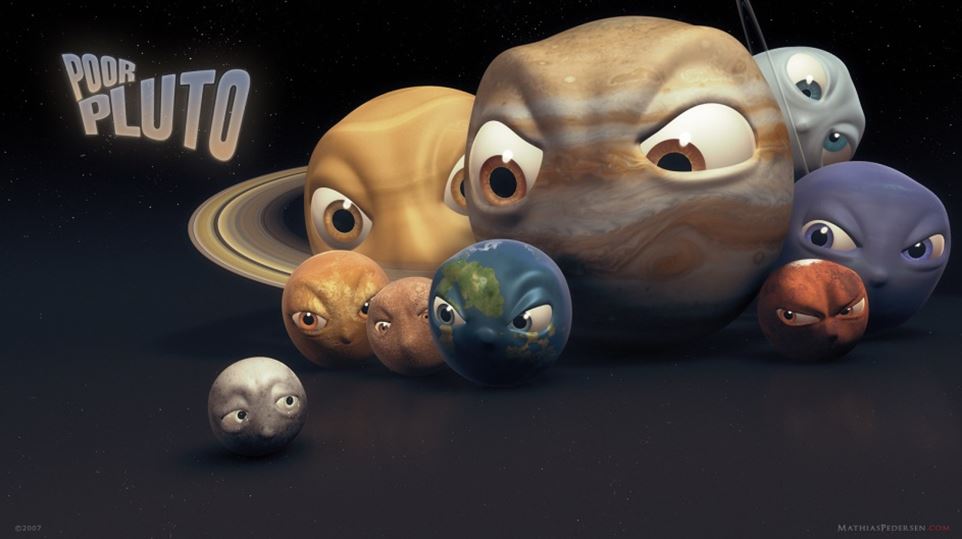
Far out, a dwarf planet
that is bigger than my toe.
We think of it as very small.
Its name is poor Pluto.

Close to home, the Moon looks like
a disc in a glistening sea.
It’s showing off its beauty
for the whole wide world to see.


Mysterious Majestic Mars by Sophie C
Trinity Anglican School, White Rock

There is a planet called Mars.
It is half the size of Earth.
Mars is our next-door neighbour.
It might be under a curse.

There is a planet called Mars
and Mars has two marvellous moons.
The fourth planet from the Sun
is where we might visit real soon!

There is a planet called Mars
which has the tallest mountain.
It has some amazing views.
Over twenty k’s high and counting.

There is a planet called Mars.
She has some beautiful hills.
Her ground’s a ridiculous red
and her dust storms could get you killed.

There is a planet called Mars.
If we moved there, could we survive?
There is not much air on Mars.
Not sure we could stay alive.

If you ever go to Mars
be careful of those dusty storms.
They’re known to rage for days and days …
and now you have been warned!

SATURDAY 10th October

You can now enjoy browsing through the photos and poems from our afternoon of poetry recitals by local student authors by clicking on the blue writing below:

Poetry Party 2015

Poems & Picture-Book stories for you to enjoy

Poems & Picture-Book stories for your enjoyment.

(for a PDF version of this poster, click here: Picture Bk & Poetry Party poster A4)

We have two talented Picture-Book author/illustrators sharing their stories!

Cairns-based author Diane Finlay published “The Duck With No Quack” in 2006. It is about a duckling called Oswald who seems to have lost his quack.  His Mama sets off in search of Oswad’s quack while her babies are having an afternoon nap.

Mena Creek artist Jacque Duffy published a series of children’s books starting with “That’s Not A House” after Cyclone Larry devastated her home near Innisfail. She will be sharing her latest book, “The Bear Said Please”.  A very hungry bear looks everywhere for his favourite food. He learns how to find it and the best way to get it.

Bring your favourite picture book to the event, so we can photograph them together and see which ones rock.

We will be at the Poolside Patio, Rydges Tradewinds Hotel, 137 Esplanade, Cairns.  Storytelling and Poetry recitals will be from 2pm to 3pm.

This event is a great opportunity for young poets and future authors to meet with well-established writers with a question-time session after the presentations.

Hosted by Science Rhymes poet Celia Berrell, with generous support from Rydges Tradewinds Hotel.


Please email celia@sciencerhymes.com.au to confirm your attendance and /or ask any questions about the event.


Celia Berrell
PO Box 830
Hervey Bay QLD 4655

Email:
feedback@sciencerhymes.com.au
Mobile:
0408 069 192
website by Precedence